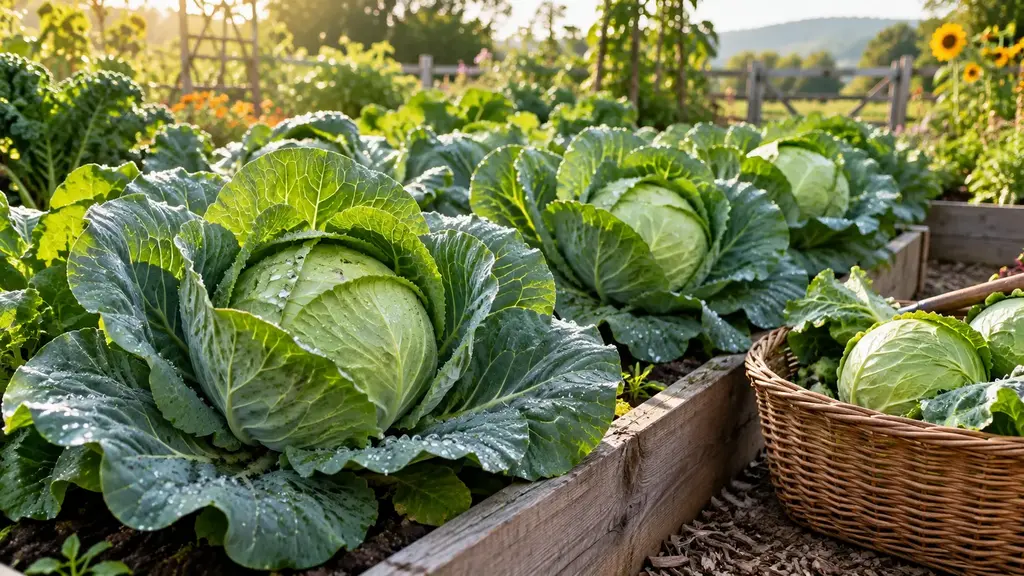
Plan cabbage for tested sauerkraut, relish, and pickled-cabbage recipes with cited row yield, spacing, and succession guidance.
Your growing location
Hardiness zone describes winter minimum temperature. It does not replace frost dates, day length, soil temperature, or current weather.
Nothing is shared until you choose a lookup button. ZIP lookup uses PHZMAPI. “Use my location” sends coordinates to BigDataCloud only to obtain a ZIP, then sends that ZIP to PHZMAPI; coordinates are not stored by this site.
Verify the result on the official USDA 2023 map; manual override always remains available.
Plants and space calculator
Space by planting style
Preservation-suitable variety direction
Zone is only one factor. Day length, disease pressure, storage quality, maturity, and use may be more important.
Dense storage or processing heads
Choose locally adapted, disease-resistant cultivars with firm heads and maturity suited to the tested recipe and harvest window.
Planting and indoor-start timing
Use local Extension transplant windows and current temperatures; cabbage can be planned for spring and fall where the regional season permits.
Current weather is not loaded automatically; check the local forecast and soil before planting.
Canning recipes using cabbage
- Red Root Relish — Bernardin
- Piccalilli Relish — Bernardin
- Dixie Relish — Bernardin
- Pickled Spiced Red Cabbage — Bernardin
- Piccalilli Canning Recipe: Tested Green Tomato and Cabbage Relish
Sources, formulas, and limits
Plants = household annual target ÷ selected yield per plant, rounded up. Area or row units = target ÷ compatible cited yield, rounded up. “Typical” uses the cited midpoint.
Virginia Cooperative Extension expert-reviewed home garden planting guide