Preserving the record
History of home canning .
Home
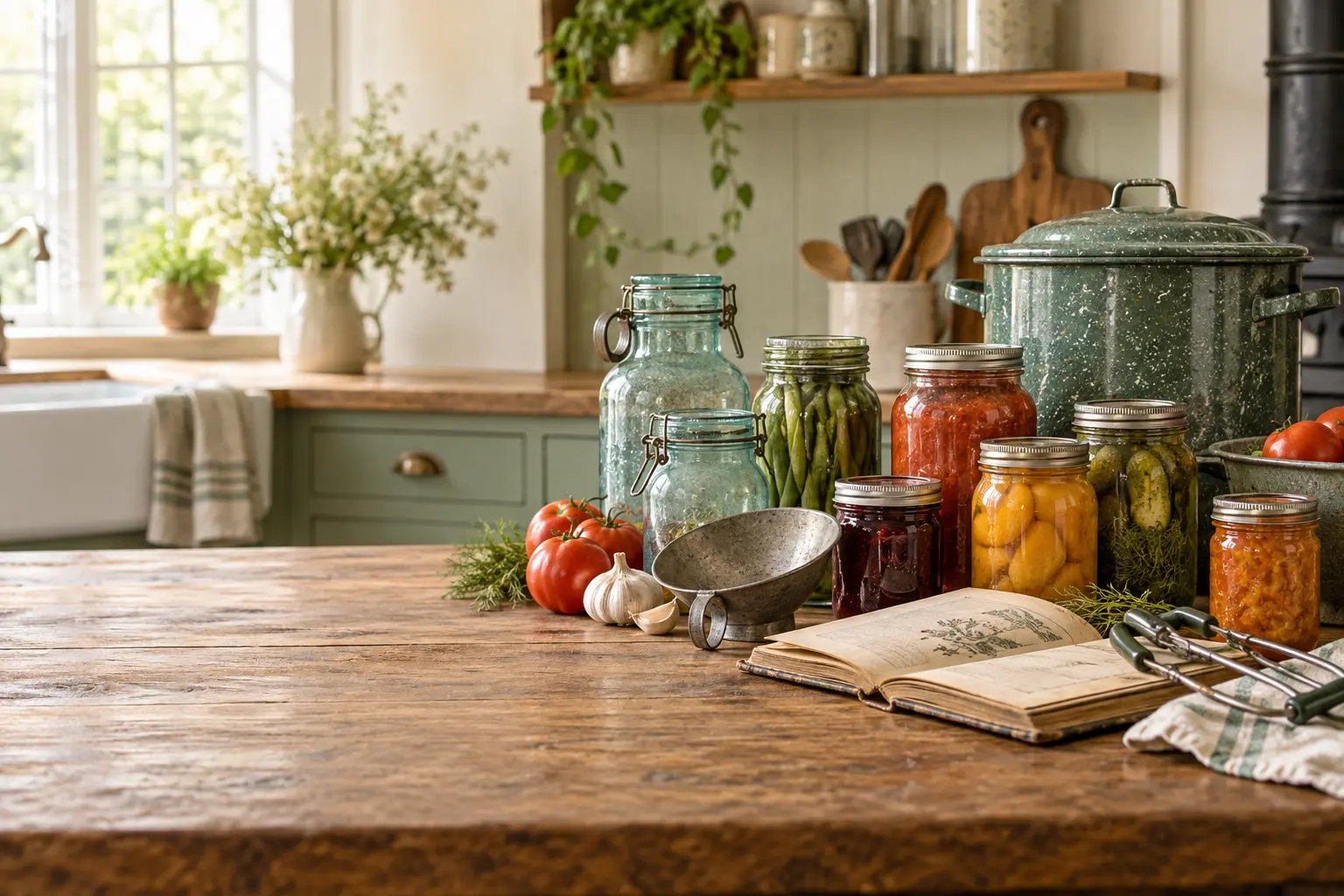
Why history matters
Old recipes document more than food.
Household practice
Books, bulletins, and community records show how families preserved seasonal harvests, which foods were available, and what equipment households actually used.
Changing knowledge
Historical instructions reveal how ideas about microorganisms, acidity, pressure, processing time, sealing, and storage evolved as food science advanced.
Critical distinction
Historically important does not mean safe today.
A recipe can be valuable evidence of past practice and still be unsuitable to follow. Historical records receive their own safety classification. Where evidence permits, the encyclopedia explains the modern concern and points to a tested method or clearly separated adaptation.
Dating the record
Publication date or earliest documented date is recorded when available. Reprints, revised editions, later adaptations, and derivative publications are distinguished when evidence supports that relationship.
Primary sources
Government and extension bulletins, university publications, manufacturer materials, household manuals, community cookbooks, archival newspapers, and regional publications preserve the closest surviving evidence of home-canning practice.
Editorial principle
Preserve first. Interpret separately.
Original historical instructions remain identifiable as source material. Modern safety interpretation, warnings, and suggested adaptations belong in separate encyclopedia metadata so the historical record is not silently rewritten.