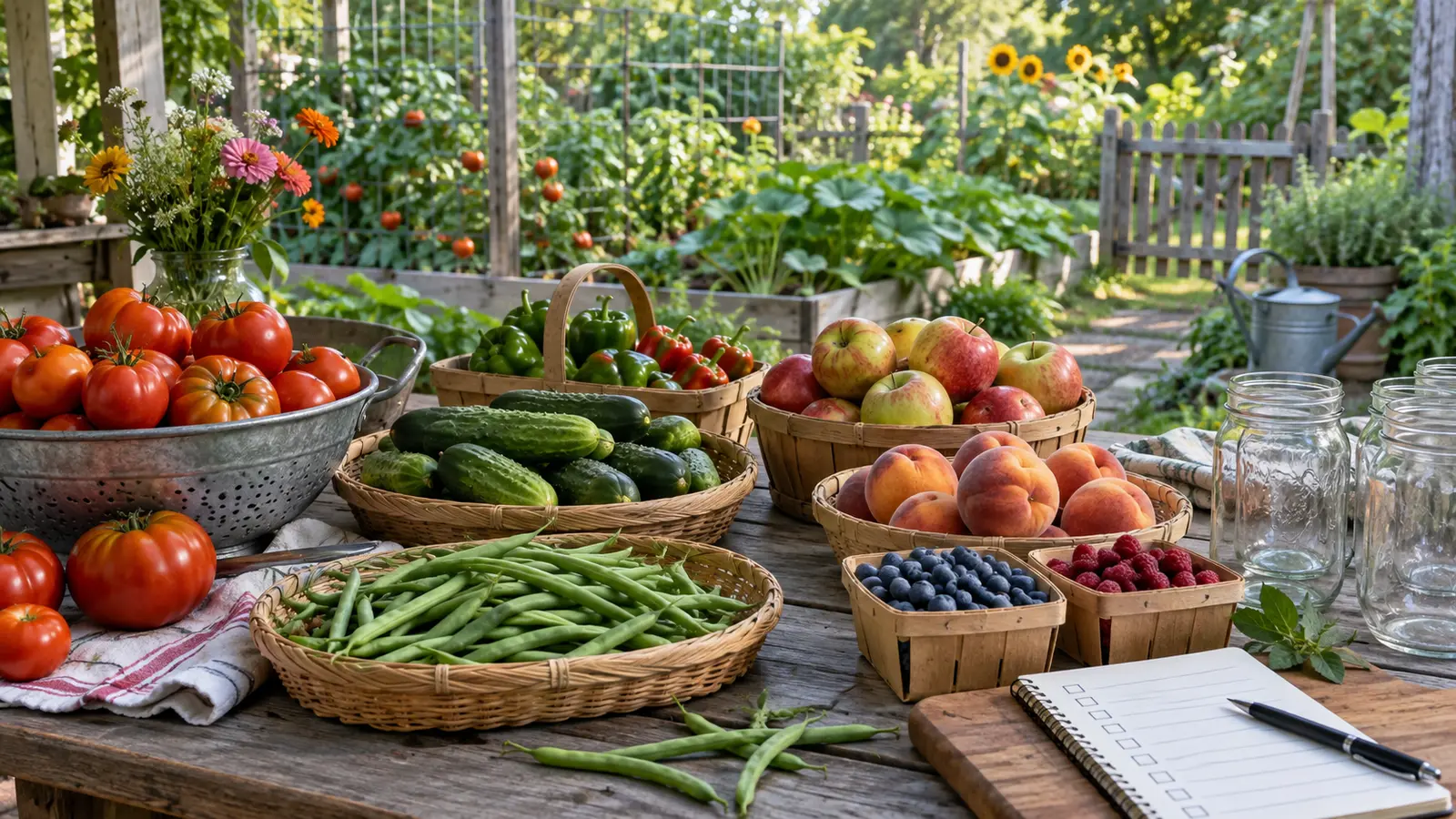
Harvest produce for
Key takeaways
- Recipe-specific maturity instructions outrank general garden advice.
- Heat and delay reduce texture and quality after harvest.
- Moldy or decayed produce does not belong in a
canning batch. - Storage preserves quality; it does not make an untested recipe safe.
Safety: Follow a current tested recipe from NCHFP, USDA, Extension, Ball or Bernardin. Preparation, acidity, jar size, processing method, time, pressure and altitude adjustment all matter.
Harvest cues for major crops
| Crop | Useful quality cue | Handling priority |
|---|---|---|
| Tomatoes | Sound fruit at recipe-specified ripeness | Protect from bruising and process promptly |
| Green beans | Tender pods before seeds become coarse | Cool soon and avoid long holding |
| Pickling cucumbers | Firm, unwaxed, recipe-sized fruit with small seeds | Pick frequently and process quickly for texture |
| Peppers | Firm walls and recipe-specified color | Reject sunscalded, decayed or soft fruit |
| Carrots and beets | Firm, smooth roots at useful size | Remove tops and prevent drying |
| Peaches and pears | Mature fruit with product-appropriate firmness | Handle gently; some pears finish ripening after harvest |
| Berries | Fully colored, sound fruit without leaking or mold | Cool and process very promptly |
| Apples | Mature seeds, developed flavor and suitable texture | Separate bruised fruit and store by cultivar capability |
Quality versus safety
Firmness, color and maturity often determine eating quality. Safety depends on the complete tested process. A perfectly harvested vegetable is still unsafe if processed by an untested method.
What to reject
Discard produce with mold, active decay, offensive odor, penetrating insect damage or extensive injury. Do not trim mold from soft fruit for a
Harvest-to-processing workflow
- Read the tested recipe and identify maturity, quantity and preparation.
- Prepare clean harvest containers and appropriate cool storage.
- Harvest during the cooler part of the day when practical.
- Shade the crop immediately; never leave it in a hot vehicle.
- Sort before storage and separate damaged produce.
- Wash as recommended, generally close to preparation.
- Prepare the canner, jars and ingredients before cutting large quantities.
- Process according to the tested recipe and record the batch.
Short-term storage principles
Crops differ in temperature and humidity needs. Cold-sensitive produce can be injured by temperatures that help berries. Apples release ethylene that can speed deterioration nearby. Use crop-specific local Extension or government guidance and treat storage as a short bridge to processing.
Frost, bruising and over-ripeness
Frost and freezing can damage cells and texture. Use only sound produce that meets the recipe. Bruised fruit may be suitable for immediate non-canning use when decay is absent. Overripe fruit may work in some specifically tested spreads but can be poor for slices or pickles.
Wash at the right time
Remove field soil with clean running water and follow the recipe. Do not use soap or household detergent on produce. Delicate crops may deteriorate faster if washed before storage.
Frequently asked questions
How quickly should produce be canned?
As promptly as practical, especially berries, beans and cucumbers. Use crop-specific cold storage if processing must wait.
Can bruised produce be canned?
Reject decay and mold. Minor bruising may be trimmed only when the remainder is sound and the recipe accepts normal trimming.
Should produce be refrigerated?
Some crops benefit from cooling; others are chilling-sensitive. Follow crop-specific guidance.
Can frost-damaged vegetables be canned?
Use only sound produce meeting recipe quality requirements; choose another method when uncertain.
Sources and methodology
Postharvest references: Consult the peer-reviewed Pacific Northwest Extension storage guide for crop-specific storage conditions and the University of Minnesota Extension tomato guide for maturity, frost, and harvest cues. Storage recommendations describe quality management; they do not replace tested
Guidance follows NCHFP canning principles and the site’s Canning Safety and Methodology policies. Consult local horticultural authorities for crop storage conditions.
Prepared by the