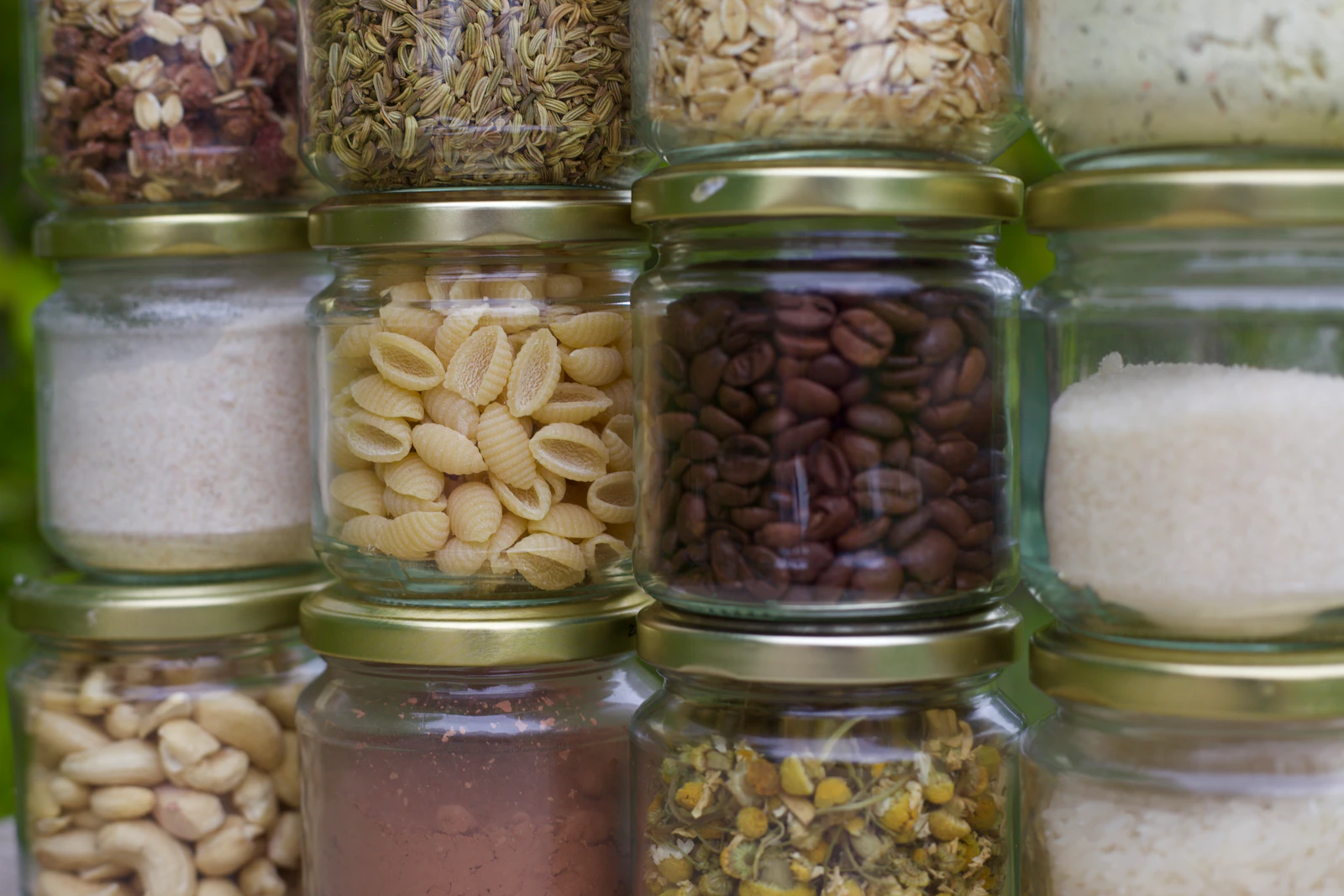
Packaging protects dry food; it does not make wet or unsafe food shelf-stable. Food must already be appropriately dried or commercially dry before sealing. The package must then limit moisture, oxygen, light, insects and physical damage for the intended storage period.
“Dry canning ” is not canning
Do not heat flour, grains, nuts or other dry foods in sealed jars in an oven. The National Center for Home Food Preservation explains that this is not a tested
Jars, Mylar-type pouches and containers
Glass jars work well for small quantities and easy inspection. Keep light-sensitive foods in darkness. High-barrier foil-laminate pouches commonly called Mylar-type bags are useful when properly sealed and protected from puncture. Food-grade buckets can protect inner packages but may not provide the required oxygen and moisture barrier alone.
Match package size to use. Reopening a large container repeatedly brings in humid air. Clean and dry every reusable container completely before filling.
Vacuum sealing
Vacuum sealing removes much of the air but does not sterilize food. Use it only for foods already dry and appropriate for room-temperature storage. Keep sealing surfaces free of crumbs and powder. A jar attachment can vacuum-seal suitable dry foods at room temperature; heating is unnecessary.
Reduced oxygen can create hazards when food contains enough moisture to support pathogens. Do not vacuum-seal moist homemade foods for pantry storage merely because the package appears tight.
Oxygen absorbers and desiccants
Oxygen absorbers reduce oxygen in a properly sealed oxygen-barrier package. Desiccants absorb moisture. They are not interchangeable. Use food-packaging products, follow manufacturer guidance and keep unused absorbers sealed until needed. Neither makes high-moisture food shelf-stable.
Shelf life and rotation
A shelf-life number is an estimate, not a safety guarantee. Food, residual moisture, fat, package barrier, seal, temperature and humidity all matter. NCHFP gives a broad four-month-to-one-year quality range for many home-dried foods and notes that heat shortens storage life. Multi-decade claims apply only to particular foods and controlled conditions.
- Label the food and packed date.
- Use first in, first out.
- Keep a small working supply and reserve packages sealed.
- Store away from heat, light, leaks, pests and strong odors.
Troubleshooting and discard decisions
| Observation | Action |
|---|---|
| Condensation or damp food | Do not leave sealed at room temperature. If promptly discovered and still wholesome, return it to a tested drying process; otherwise discard. |
| Mold, fermentation, slime or abnormal odor | Discard without tasting. |
| Insects or chewed packaging | Discard contaminated food and inspect nearby packages. |
| Vacuum lost or pouch punctured | When the timing or exposure is uncertain, discard. |
| Rancid or paint-like odor | Discard; reduced oxygen does not stop all fat deterioration. |
Research-based resources
- NCHFP: Packaging and Storing Dried Foods
- NCHFP: “Dry Canning” Isn’t Canning
- USU Extension: Packaging Foods
- USU Extension: Packaging Methods
- USU Extension: Storage Conditions
- University of Minnesota Extension: Vacuum-Sealing Mason Jars
Editorially reviewed September 23, 2026. Packaging guidance applies to appropriately dry foods; it is not a substitute for
Questions or results?
Discuss this recipe with the canning community. Community comments do not replace the tested source or safety classification shown on this page.
Join the discussion
Please log in or create a free account to discuss this recipe. You will return here afterward.