Home
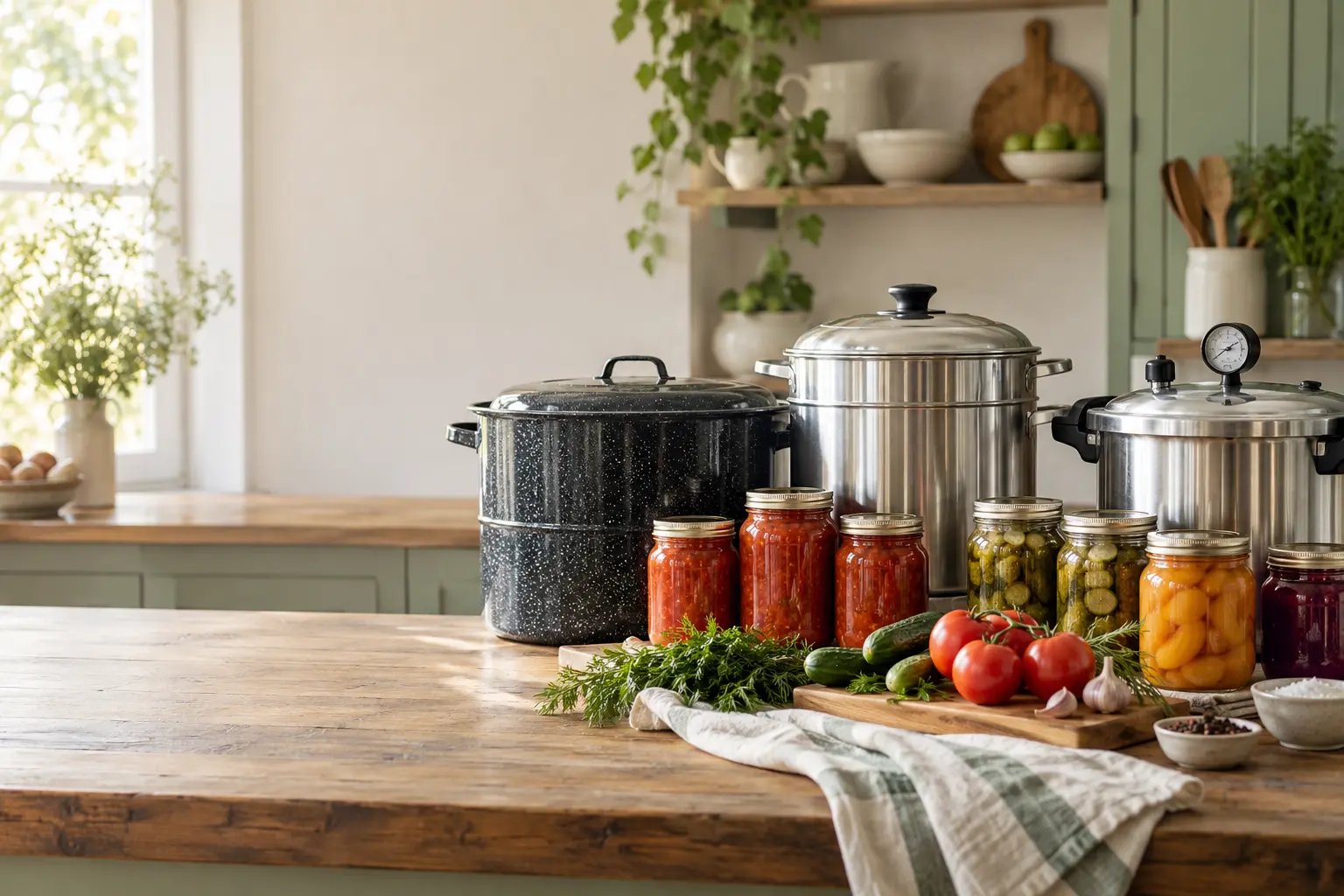
Choosing the right home canning method
Safe home
Boiling-water
For naturally acidic or properly acidified foods when a tested recipe specifies a boiling-water process.
Pressure
For low-acid shelf-stable foods when a validated pressure-canning process is available.
Atmospheric steam
For qualifying acid or acidified foods when the complete process meets research-based steam-canning limits.
Low-temperature pasteurization
A recipe-specific 180–185°F treatment for certain tested pickle recipes—not a general substitute for boiling-water or pressure
Choose the process from the complete recipe.
The correct method depends on formulation, acidity, ingredient proportions, jar size, pack style, headspace, processing time, altitude, and other process factors—not simply on what category the food belongs to.
Do not improvise the processing method. Do not convert pressure-canning recipes to boiling-water or steam