Method guide · High-acid foods
Boiling-water canning
Boiling-water
At least 1 inch above jars
2 inches when over 30 minutes
Processing time increases with elevation
When it is appropriate
Use boiling-water
Equipment and water depth
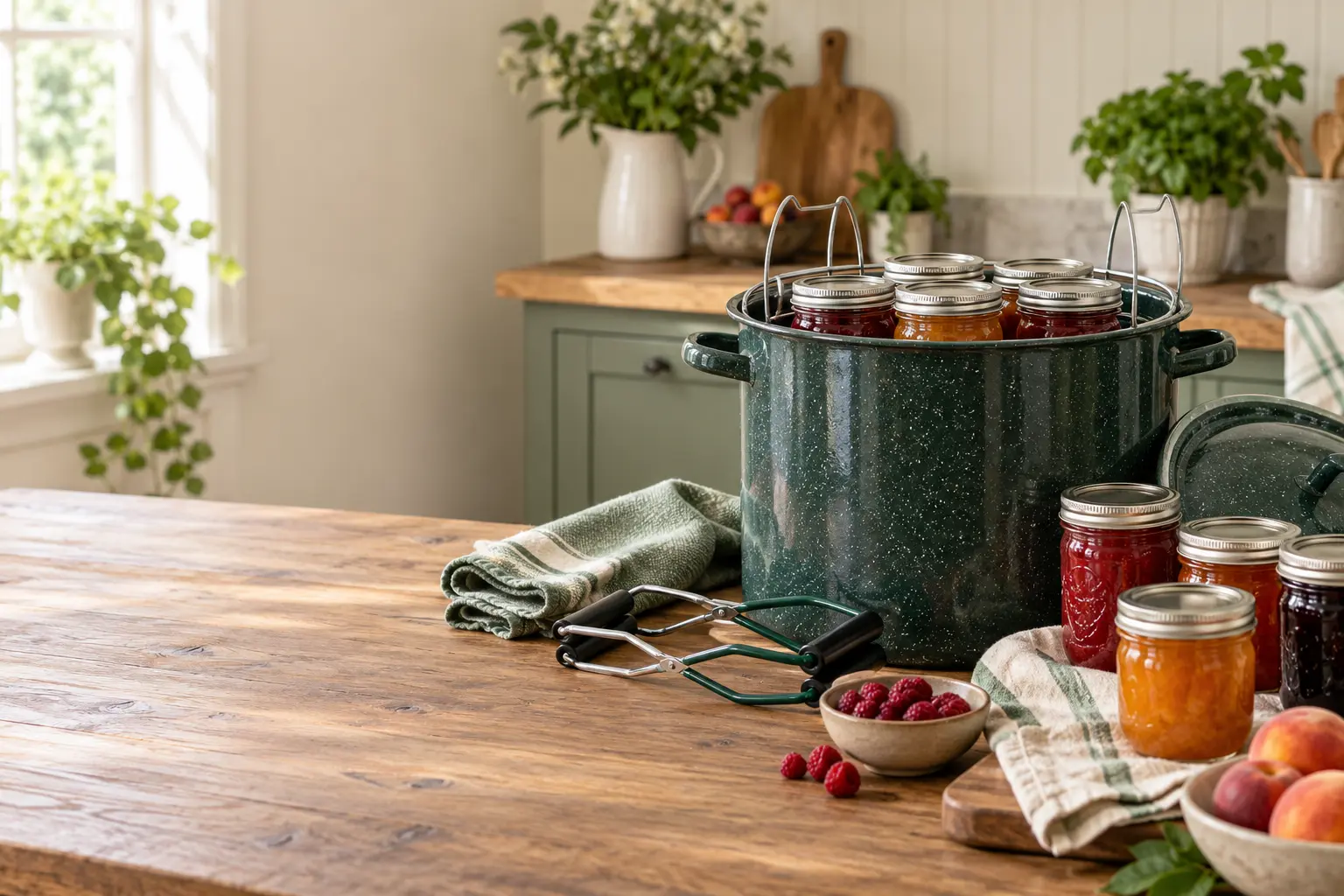
The canner should have a fitted lid and rack and be deep enough to keep at least 1 inch of boiling water over the jars throughout processing; NCHFP advises 2 inches for processes longer than 30 minutes.
Processing sequence
- Prepare jars and food exactly as directed by the research-based recipe.
- Preheat canner water appropriately for the pack style.
- Load filled jars upright on the rack.
- Add boiling water if needed to maintain the required depth.
- Bring the water to a vigorous boil before starting the timer.
- Maintain a complete boil for the full processing time.
- If boiling stops, return to a vigorous boil and restart the full processing time.
- Follow current guidance for jar removal and cooling.
Altitude matters.
Water boils at a lower temperature as elevation increases. Research-based boiling-water processes compensate by increasing processing time. Always use the altitude adjustment supplied with the recipe or authoritative guidance.
Authoritative reference
National Center for Home Food Preservation — Using Boiling Water Canners
Recipe-specific directions control. This guide explains the method and does not substitute generic times for an individual tested recipe.