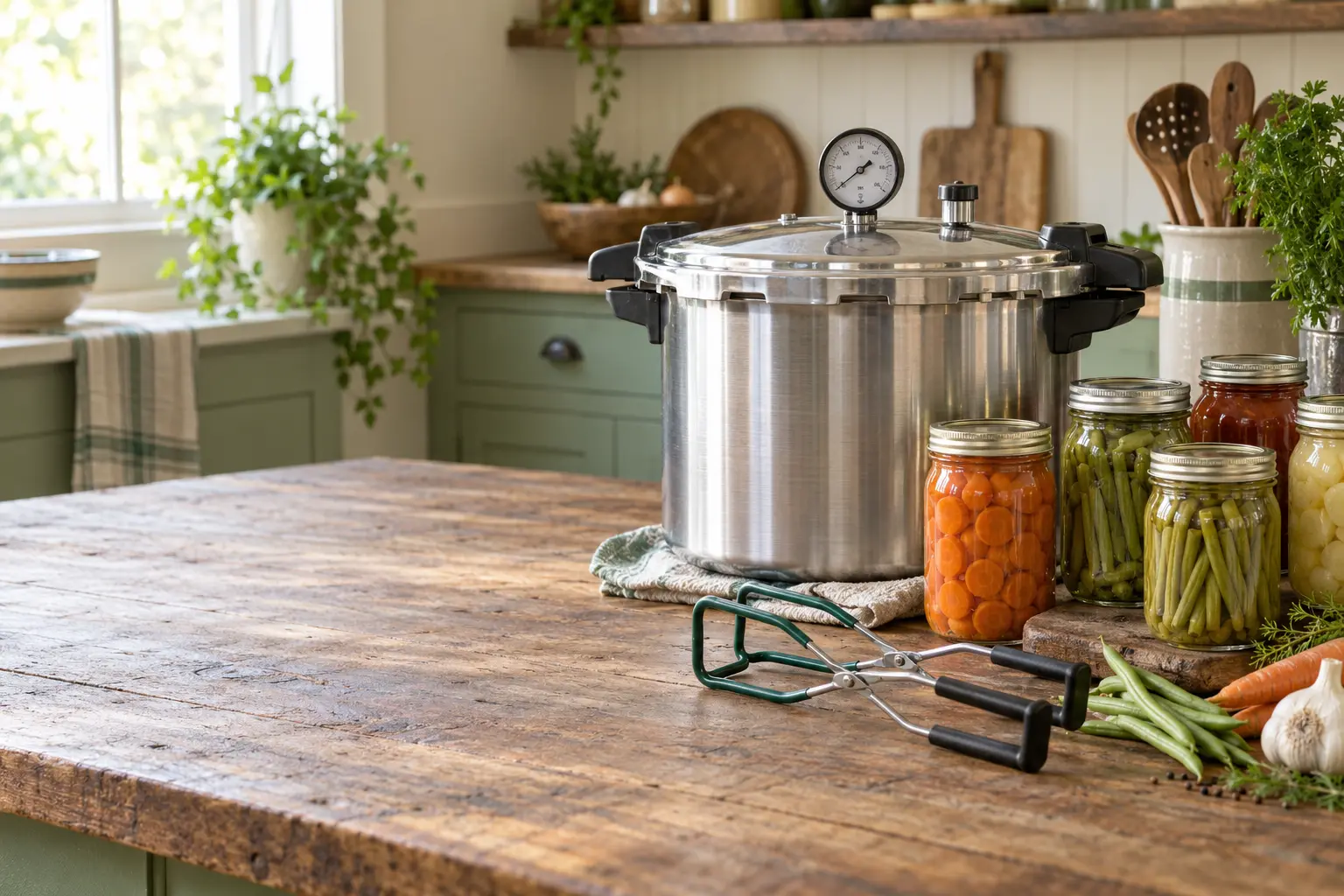
Method guide · Low-acid foods
Pressure canning
Pressure
Continuous steam for 10 minutes
Never fall below the required level
Depressurize naturally
Why pressure is necessary
Low-acid foods can support growth and toxin formation by Clostridium botulinum if improperly processed. A pressure canner reaches temperatures above boiling-water temperatures so a validated process can deliver the required heat treatment.
Use a pressure canner
Follow current USDA/NCHFP recommendations and the manufacturer’s instructions for the specific canner. The recipe must provide jar size, processing time, pressure, gauge type, and altitude adjustment.
Critical process controls
- Vent the loaded canner with steam flowing freely for 10 minutes before pressurizing.
- Start timing only after the canner reaches the pressure specified by the recipe.
- Regulate heat to maintain the required pressure for the full process.
- If pressure drops below the required amount, return to pressure and restart the full processing time.
- Use the correct altitude adjustment for the canner’s dial or weighted gauge.
- At the end, turn off the heat and allow the canner to depressurize naturally. Do not force-cool it or remove the weight early.
Gauge type and altitude matter.
Pressure adjustments depend on elevation and whether the canner uses a dial gauge or weighted gauge. Use the exact authoritative schedule for that gauge type; do not substitute one table for another.
Authoritative references
National Center for Home Food Preservation — Using Pressure Canners
NCHFP — Recommended Canners
Recipe-specific directions control. This guide explains the method; it does not replace an individual tested processing schedule.