Safety classification
Tested
Testing authority: NCHFP / USDA modern adaptation
Safety reviewed: 09/20/2026
Processing details
Altitude adjustment: Use the exact altitude-adjusted schedule in the cited recipe card.
Safety classification
Tested
Testing authority: NCHFP / USDA modern adaptation
Safety reviewed: 09/20/2026
Processing details
Altitude adjustment: Use the exact altitude-adjusted schedule in the cited recipe card.
Tested source
Tested source. NCHFP Peaches—Halved or Sliced · Fowler’s Vacola Australia
Preparation timeline
- Dip yellow-flesh peaches in boiling water for 30 to 60 seconds until skins loosen. Transfer to cold water, slip off skins, halve, remove pits, and slice if desired.
- Hold peeled fruit in ascorbic acid solution if desired to limit browning. Prepare and boil the selected syrup, water, apple juice, or white grape juice.
- Drain the fruit, place it in the boiling packing liquid, and return to a boil.
- Fill hot jars with hot fruit and liquid, placing peach halves cut-side down and leaving 1/2-inch headspace. Remove bubbles, adjust headspace, wipe rims, and apply compatible lids.
- Process hot-packed pints for 20 minutes or quarts for 25 minutes at 0–1,000 ft in a boiling-water canner. Increase time for altitude exactly as specified by NCHFP.
- Cool jars undisturbed for 12 to 24 hours and verify seals. Refrigerate any unsealed jars.
Equipment
- Boiling-water canner
- Australian-style preserving jars
- Jar lifter
- Large saucepan
Visual method guide
- Prepare: Dip yellow-flesh peaches in boiling water for 30 to 60 seconds until skins loosen. Transfer to cold water, slip off skins, halve, remove pits, and slice if desired.
- Combine or cook: Hold peeled fruit in ascorbic acid solution if desired to limit browning. Prepare and boil the selected syrup, water, apple juice, or white grape juice.
- Fill: Drain the fruit, place it in the boiling packing liquid, and return to a boil.
- Process: Fill hot jars with hot fruit and liquid, placing peach halves cut-side down and leaving 1/2-inch headspace. Remove bubbles, adjust headspace, wipe rims, and apply compatible lids.
Safety summary
Australian Fowler-style bottled yellow peaches using a modern research-tested boiling-water process.
Safety classification: Tested modern adaptation. The Australian context refers to the preserving-jar tradition, while all preparation, headspace, jar-size, and processing requirements come from NCHFP/USDA research. Use yellow-flesh peaches only. Freeze white-flesh peaches because no researched home-canning process is available for them.
The tested packing liquids include syrup, water, apple juice, or white grape juice. Do not use white-flesh peaches, substitute historical Fowler schedules, use jars larger than quarts, or shorten processing. No other change is presented as safe unless the original tested source permits it.
Heat peeled fruit in the selected boiling liquid before packing; place halves cut-side down. Refrigerate an unsealed jar promptly or reprocess within 24 hours with a new lid and the full tested process.
Editorial review: Safety-critical values are tied to the cited source and must survive imports and audits.
About this recipe
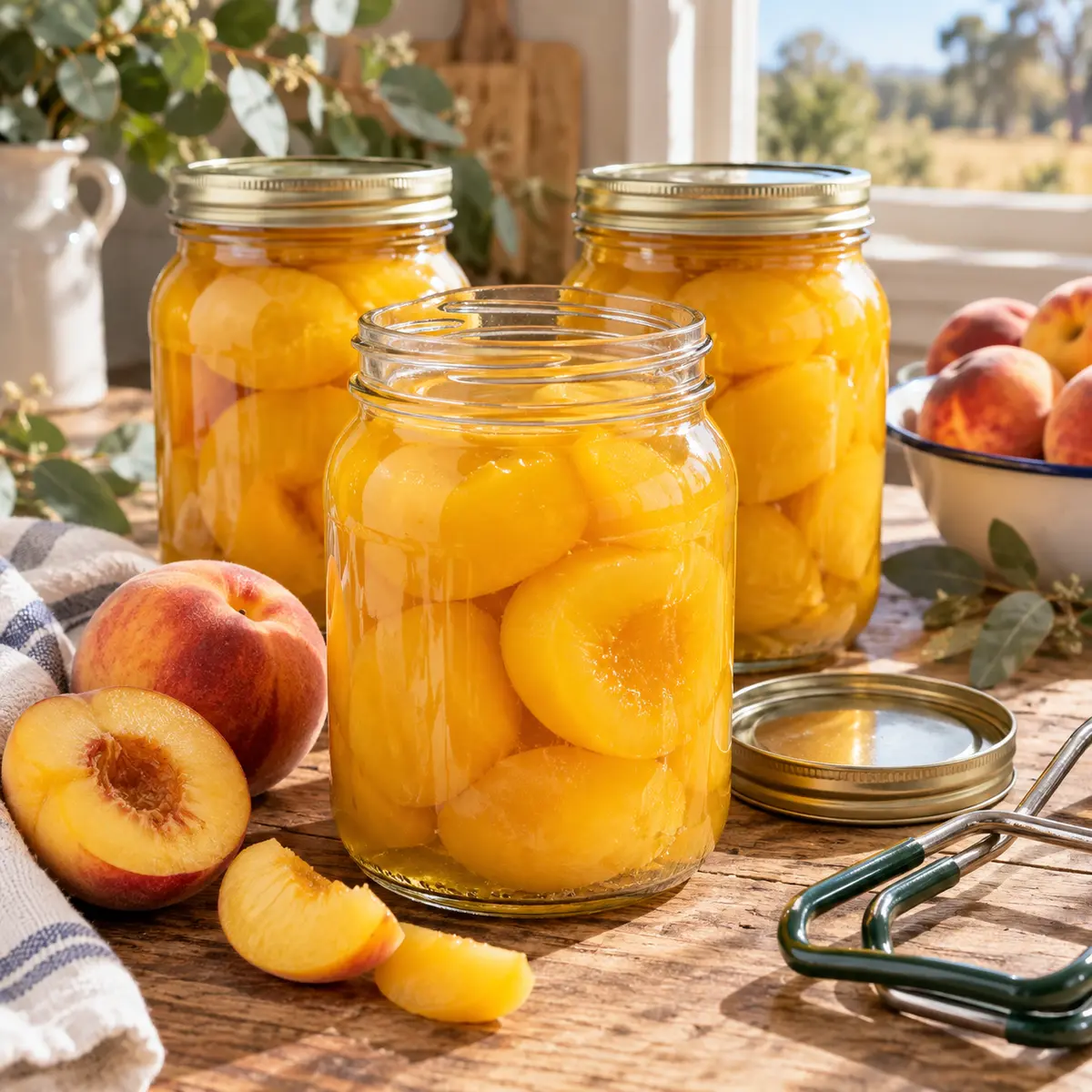
Yellow-flesh peaches bottled in an Australian preserving-jar style while following the research-tested NCHFP hot-pack process.
Before you begin
- Method
- Boiling-water
canning - Headspace
- 1/2-inch headspace
- Recipe standard
- Use the complete formula and directions in the recipe card.
Safety classification
Tested
Testing authority: NCHFP / USDA modern adaptation
Safety reviewed: 09/20/2026
Processing details
Altitude adjustment: Use the exact altitude-adjusted schedule in the cited recipe card.
Australian-Style Bottled Peaches — Modern Safe Adaptation
Ingredients
- 17 1/2 lb ripe yellow-flesh peaches approximately one 7-quart canner load; do not use white-flesh peaches
- very light, light, or medium canning syrup or water, apple juice, or white grape juice; enough to cover
- ascorbic acid solution optional, to prevent darkening
Equipment
- Boiling-water canner
- 7 Australian-style preserving jars or standard Mason jars with compatible new lids
Directions
- Dip yellow-flesh peaches in boiling water for 30 to 60 seconds until skins loosen. Transfer to cold water, slip off skins, halve, remove pits, and slice if desired.
- Hold peeled fruit in ascorbic acid solution if desired to limit browning. Prepare and boil the selected syrup, water, apple juice, or white grape juice.
- Drain the fruit, place it in the boiling packing liquid, and return to a boil.
- Fill hot jars with hot fruit and liquid, placing peach halves cut-side down and leaving 1/2-inch headspace. Remove bubbles, adjust headspace, wipe rims, and apply compatible lids.
- Process hot-packed pints for 20 minutes or quarts for 25 minutes at 0–1,000 ft in a boiling-water canner. Increase time for altitude exactly as specified by NCHFP.
- Cool jars undisturbed for 12 to 24 hours and verify seals. Refrigerate any unsealed jars.
Recipe Notes
Private Notes
Questions or results?
Discuss this recipe with the canning community. Community comments do not replace the tested source or safety classification shown on this page.
Join the discussion
Please log in or create a free account to discuss this recipe. You will return here afterward.
Tried this recipe?
Share your results how it turned out.Serving suggestions
After opening, refrigerate the product and use it in ways appropriate to this recipe.
Frequently asked questions
Can I change the recipe?
Do not change safety-critical proportions, jar size, headspace,
What if a jar does not seal?
Follow the cited source’s instructions for an unsealed jar; refrigerate promptly when required.
Comparison and context
Yellow-flesh peaches bottled in an Australian preserving-jar style while following the research-tested NCHFP hot-pack process.
Troubleshooting
Cool jars undisturbed for 12 to 24 hours and verify seals. Refrigerate any unsealed jars.
Source & provenance
Garden planning for this recipe
Plant, space, variety, zone, and timing estimates live on dedicated ingredient pages:
Typical canning season
Season: Summer, Fall
Months: July, August, September
How much of the main ingredient should I grow?
25–50 lb of Tree fruit per person per year
This is an annual planning range that includes preserving and typical fresh use. Plant, row-foot, and square-foot estimates are shown only when compatible cited yield or spacing data is available.
Garden yields vary by cultivar, climate, soil, pests, and care. Always measure the exact prepared ingredient amount required by the tested canning recipe.