🔴 Unsafe — Do Not Use
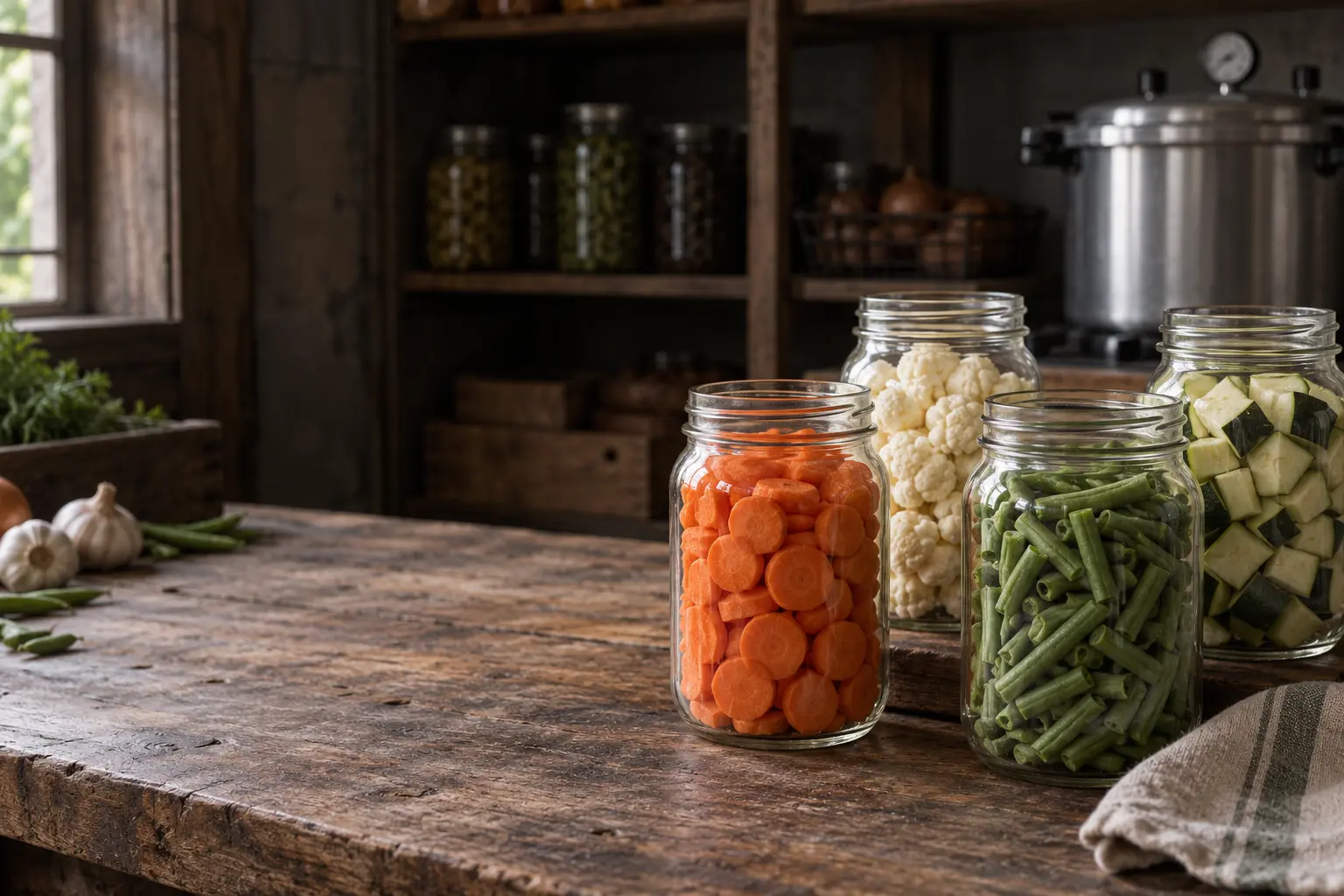
This encyclopedia record documents a circulating home-canning method in which raw vegetables are placed in jars without the covering liquid required by tested USDA procedures and then pressure canned using times intended for liquid-packed vegetables.
Why it is unsafe
The tested pressure-canning schedules for low-acid vegetables depend on the complete preparation and jar-filling method used during process development. NCHFP explains that the covering liquid is necessary for expected heat penetration. Removing that liquid changes heat transfer, so the tested process time cannot be assumed to destroy Clostridium botulinum spores adequately.
Botulism toxin may be present without visible spoilage or odor. Adding butter or ghee is not a substitute for the required liquid and is not part of the tested process.
Safe alternative
Use a current USDA/NCHFP tested recipe for the specific vegetable and follow the stated preparation, covering liquid, headspace, jar size, pressure, processing time, gauge type, and altitude adjustment exactly. Review the Canning Safety guide and Pressure Canning Guide before preserving low-acid vegetables.
Classification
Safety status: Unsafe / Do Not Use. This record is included for documentation and education only and intentionally does not contain WP Recipe Maker Recipe schema.
Source and provenance
National Center for Home Food Preservation, “Dry