Safety classification
Tested
Testing authority: National Center for Home Food Preservation (University of Georgia / USDA-derived guidance)
Safety reviewed: 09/09/2026
Processing details
Altitude adjustment: Increase boiling-water processing by elevation: 20, 25, 30, or 35 minutes across the documented altitude bands.
Source & provenance
Safety classification: Tested recipe from NCHFP.
Safety summary
Use one pint of water or syrup per 5 pounds of sliced apples and retain the 5-minute boil. Do not use larger jars or shorten processing.
Processing details
- Method
- Boiling Water
- Pack style
- Hot
- Jar sizes
- Pint or Quart Jars
- Headspace
- 1/2 inch
- Processing time
- 20/25/30/35 min at 0–1,000 / 1,001–3,000 / 3,001–6,000 / above 6,000 ft
Tested source
Safety status: Tested authoritative recipe. Follow the National Center for Home Food Preservation source exactly.
Canning timeline
- Prepare the canner, jars, and ingredients.
- Peel, core, and slice apples; prevent darkening, drain, then boil slices 5 minutes in water or syrup before filling hot.
- Fill pints or quarts, leaving 1/2 inch headspace.
- 20/25/30/35 minutes at 0–1,000/1,001–3,000/3,001–6,000/above 6,000 ft.
- Cool undisturbed for 12 to 24 hours and check seals.
Equipment
Boiling-water canner, large saucepan, apple peeler or knife, jar lifter, and pint or quart jars.
Visual method guide
- Prepare: Select sound fruit or vegetables and measure exactly.
- Pack: Hot pack recommended; remove air bubbles and maintain 1/2 inch headspace.
- Process: Boiling-water canning; use the schedule for your altitude.
- Cool: Keep jars upright and undisturbed before testing seals.
Safety essentials
Tested NCHFP hot-pack fruit recipe. Raw packs make poor-quality products; use the documented hot-pack procedure.
About this recipe
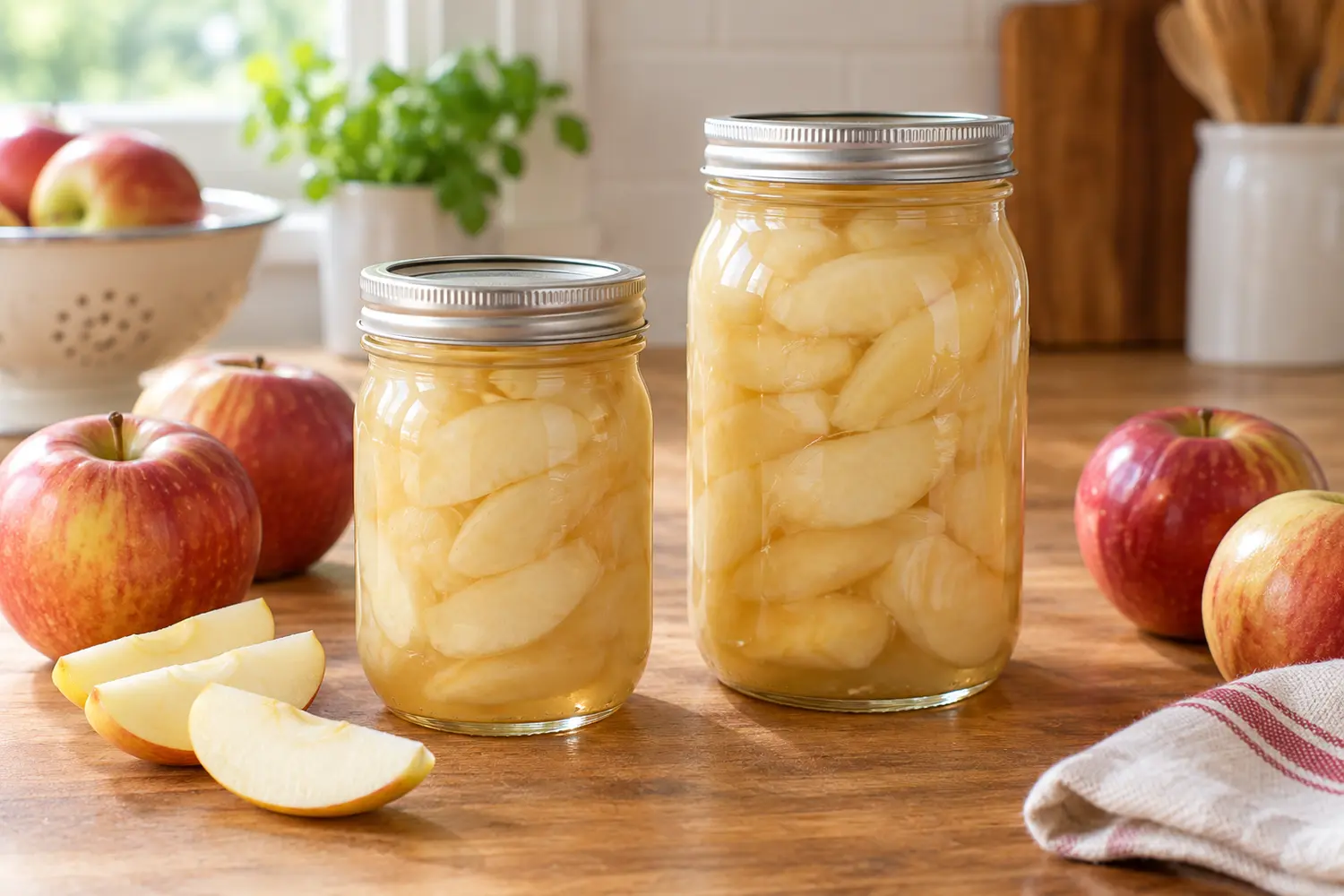
Apples, Sliced is a tested NCHFP home-canning recipe using hot pack recommended and boiling-water canning.
Before you begin
- Method
- Boiling-water canning
- Pack
- Hot pack recommended
- Jar size
- Pints or quarts
- Headspace
- 1/2 inch
Read the authoritative source completely before processing.
Altitude and processing schedule
20/25/30/35 minutes at 0–1,000/1,001–3,000/3,001–6,000/above 6,000 ft.
Affiliate disclosure: This recipe may contain affiliate links to canning equipment. We may earn a commission from qualifying purchases at no additional cost to you.
Apples, Sliced — NCHFP
Ingredients
- 19 lb apples average for 7-quart canner load
- 1 pint water or very light, light, or medium syrup per 5 lb sliced apples
- ascorbic acid solution for preventing discoloration
Equipment
- 1 Boiling-water canner For the documented process.
- 7–9 Pint or quart canning jars About 7 quarts per canner load or equivalent pints.
- 7–9 Two-piece canning lids Use new flat lids and prepare according to manufacturer directions.
Directions
- Wash, peel, core, and slice apples. Hold slices in ascorbic acid solution to prevent discoloration.
- Drain slices. Add 1 pint water or syrup per 5 pounds sliced apples and boil 5 minutes, stirring occasionally.
- Fill hot jars with hot apple slices and liquid, leaving 1/2-inch headspace.
- Process pints or quarts in a boiling-water canner: 20 minutes at 0–1,000 ft; 25 minutes at 1,001–3,000 ft; 30 minutes at 3,001–6,000 ft; 35 minutes above 6,000 ft.
Recipe Notes
Private Notes
Questions or results?
Discuss this recipe with the canning community. Community comments do not replace the tested source or safety classification shown on this page.
Join the discussion
Please log in or create a free account to discuss this recipe. You will return here afterward.
Tried this recipe?
Share your results how it turned out.Serving suggestions
Use in pies, crisps, cobblers, oatmeal, pancakes, or as a warm side dish.
Frequently asked questions
Can I change the ingredients or process?
Only make changes expressly permitted by the authoritative source. Use one pint of water or syrup per 5 pounds of sliced apples and retain the 5-minute boil. Do not use larger jars or shorten processing.
What if a jar does not seal?
Refrigerate promptly, or reprocess within 24 hours using a new lid and the complete tested process if current food-safety guidance permits.
How this recipe compares
Hot pack is recommended because raw-packed apples float and produce poorer-quality jars.
Troubleshooting
Pack hot slices firmly without crushing, remove trapped air, and keep the 1/2-inch headspace.
Discard any jar that leaks, bulges, spurts, is moldy, or otherwise shows spoilage. Never taste food to determine safety.
Source & provenance
National Center for Home Food Preservation: Apples, Sliced. National Center for Home Food Preservation tested fruit-canning guidance.
Garden planning for this recipe
Plant, space, variety, zone, and timing estimates live on dedicated ingredient pages:
Typical canning season
Season: Fall
Months: September, October, November
How much of the main ingredient should I grow?
35–70 lb of Apples per person per year
This is an annual planning range that includes preserving and typical fresh use. Plant, row-foot, and square-foot estimates are shown only when compatible cited yield or spacing data is available.
Garden yields vary by cultivar, climate, soil, pests, and care. Always measure the exact prepared ingredient amount required by the tested canning recipe.