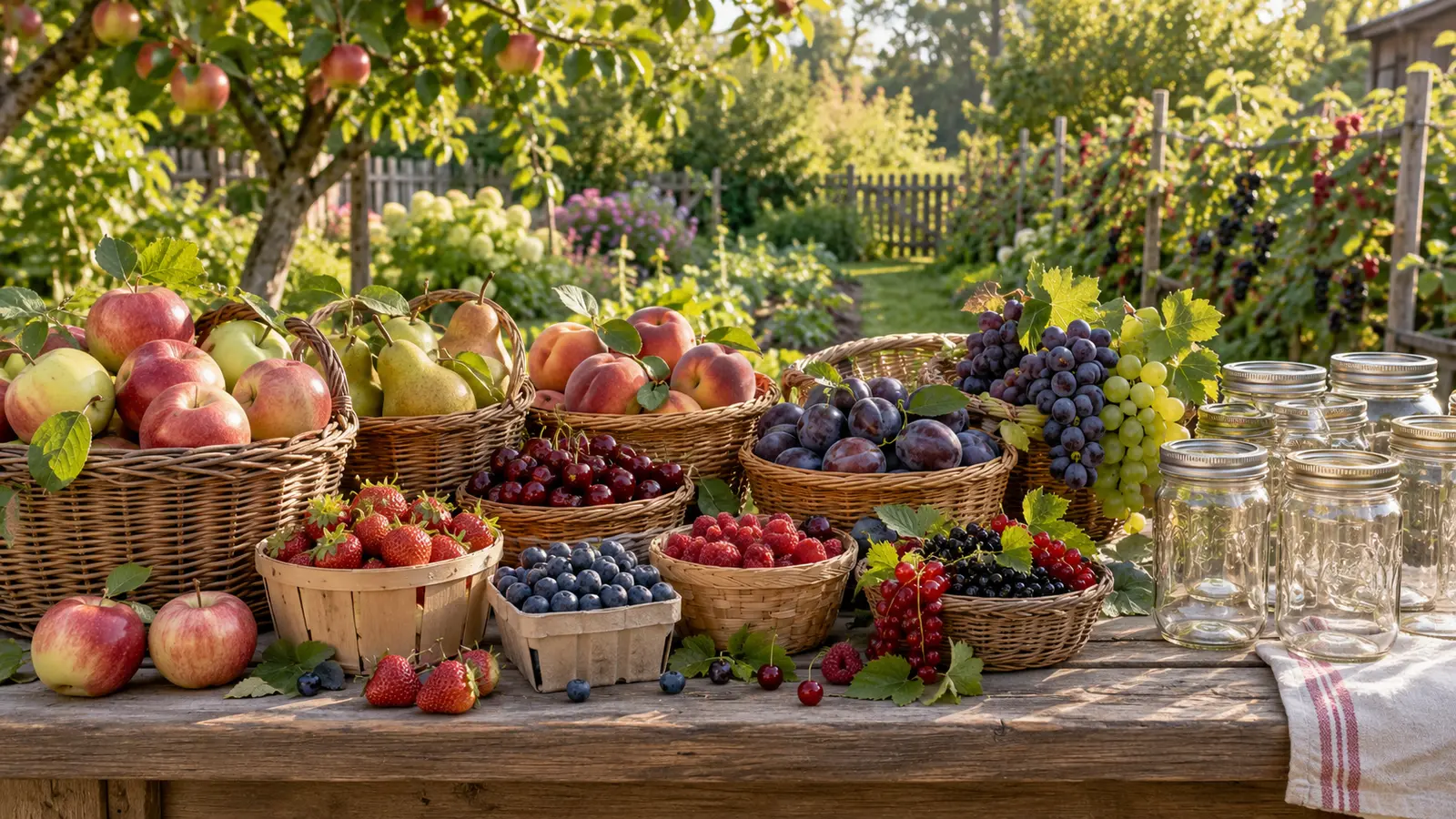
The best fruits to grow for home
Key takeaways
- Match hardiness, chill needs and disease resistance to the site before comparing flavor.
- Check pollination requirements; some fruits need a compatible cultivar nearby.
- Fruit trees and perennial berries may take years to reach useful yields.
- Variety affects texture, pectin, flavor and harvest window, but never replaces a tested recipe.
Home-canning safety: Use a current tested recipe from NCHFP, USDA, Extension, Ball or Bernardin. Do not change jar size, acidity, ingredient proportions, processing time, pressure or altitude adjustment.
Compare fruit crops for preserving
| Fruit | Preserving strengths | Planning issue | Planner |
|---|---|---|---|
| Apples | Slices, sauce, butter, juice, jelly and tested pie filling | Texture, storage and pollination | Apple planner |
| Pears | Halves, slices, preserves and tested pickles | Harvest mature but firm; many ripen after picking | Pear planner |
| Peaches and apricots | Halves, slices, preserves, jam and toppings | Chill needs, late frost and rapid processing | Peach · Apricot |
| Plums and cherries | Whole or cut fruit, jam, jelly and preserves | Pollination varies; birds can take the crop quickly | Plum · Cherry |
| Grapes | Juice, jelly and whole-fruit recipes | Trellis, pruning and regional disease pressure | Grape planner |
| Berries | Jam, preserves, syrup and mixed tested products | Short shelf life and frequent harvest | Strawberry · Blueberry · Raspberry |
Climate, chill and frost
Fruit survival and fruiting are different questions. A tree may survive winter but fail to crop if spring frost damages bloom or winter chill is insufficient. Use local government or university recommendations for hardiness, chill requirements, heat tolerance and regional diseases.
Pollination matters
Some cultivars are self-fruitful; others need a compatible cultivar blooming at the same time. Confirm pollination compatibility before buying. Insect activity and bloom weather also affect fruit set.
Choose traits for the finished product
- Firm texture for halves, slices and pie filling.
- Natural pectin and acid influence gel quality, but the tested formula remains controlling.
- Staggered ripening spreads fresh use and processing.
- Concentrated ripening helps assemble full canner loads.
- Disease resistance often matters more than catalog descriptions.
Bearing age and mature space
Strawberries may crop quickly, while tree fruits and brambles require establishment and training. Standard, semi-dwarf and dwarf trees differ in mature footprint, support needs and lifespan. Base the plan on mature size, not the nursery pot.
Harvest quality
Use sound fruit at the maturity specified by the tested recipe. Overripe fruit can lose texture and may be unsuitable for some products. Discard moldy fruit rather than trimming it for
Frequently asked questions
What fruit is easiest to grow for canning ?
The easiest is locally adapted and disease resistant. Strawberries bear quickly; apples support many products but require space and long-term care.
Do I need two fruit trees?
Sometimes. Pollination depends on species and cultivar. Confirm compatibility and overlapping bloom.
Can low-acid fruit be water-bath canned?
Use only the process in a tested recipe. Do not infer safety from taste or a home pH reading.
Can windfall fruit be canned?
Use only sound fruit of suitable maturity. Discard moldy, decayed or contaminated fruit.
Should I plant a whole orchard?
Only if mature space, pruning, pest management and processing workload fit your household.
Sources and methodology
Horticultural reference: The University of Minnesota Extension home-apple guide provides research-based context for cultivar selection, cross-pollination, site requirements, bearing, and harvest. Climate, chill accumulation, rootstock, disease pressure, and local pollinators can materially change results.
Recommendations combine crop characteristics and realistic planning ranges with NCHFP safety guidance. Consult local horticultural authorities for planting dates and varieties. See Canning Safety and Methodology.
Prepared by the