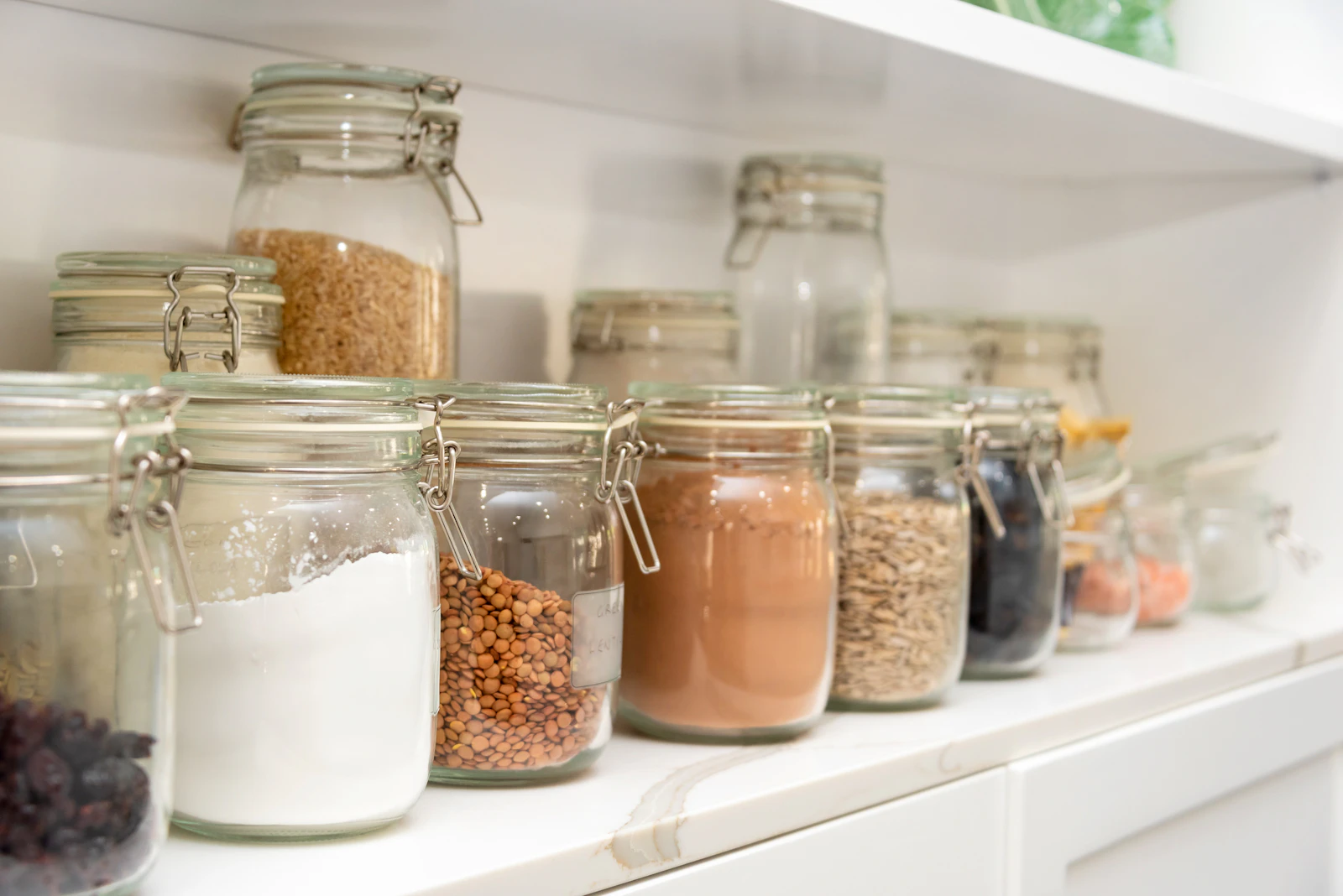
A useful dry pantry is built around foods your household actually eats, packaged in amounts you can rotate and stored where temperature, moisture, light, insects and rodents can be controlled. A very large package is not economical if it deteriorates before use.
The four controls that matter most
- Moisture: Dry foods must remain dry. Humidity can lead to clumping, mold, bacterial growth and package failure.
- Temperature: Cooler, stable storage generally preserves quality longer.
- Oxygen and light: These accelerate rancidity, color loss and flavor changes in susceptible foods.
- Pests: Use sound food-grade containers, inspect incoming products and keep shelving clean.
Utah State University Extension recommends manageable container sizes for staples such as wheat, beans, rice, oatmeal and cornmeal. Smaller working quantities are easier to move, inspect and use before contamination or infestation becomes a problem.
Beans and legumes
Store sound, dry beans in food-grade packaging that limits moisture and insects. Oxygen-reduced packaging can help quality and insect control when beans are dry and the container is suitable. Older beans may require longer cooking, so rotate them into normal meals.
Flours and milled meals
Milling exposes more surface area and shortens quality life, especially for whole-grain flour and meals containing natural oils. Keep practical pantry quantities at room temperature and protect them from heat, light, odors and moisture. Use colder storage when keeping higher-fat flours longer.
Rice, pasta and cereals
White rice and dry pasta store best when kept dry, cool and protected from insects. Brown rice and whole-grain cereals contain more oil and are more prone to rancidity. Match package sizes to actual use and rotate first in, first out.
Sugars, salt and baking ingredients
Granulated sugar and salt primarily need protection from moisture and contamination. USU notes that sugar should be kept cool, dry and odor-free because it absorbs odors and hardens when exposed to moisture. Keep baking powder, baking soda and packaged yeast clean and dry and follow manufacturer quality dates.
Whole grains
Whole kernels generally store better than milled flour, but still require protection from moisture, pests, heat and oxygen. Store food intended for human consumption, not treated seed grain. Plan for the mill, water and fuel needed to prepare stored staples.
Rotation system
- Record the food, variety, amount and packed date.
- Keep a small working container and reserve packages closed.
- Use the oldest acceptable package first.
- Inspect for moisture, webbing, insects, holes, rust, broken seals and off odors.
- Discard moldy, wet, contaminated or pest-damaged food.
- Store what you eat and practice cooking it.
Research-based resources
- USU Extension: Food Storage in the Home
- USU Extension: Food Storage Booklet
- USU Extension: Storing Dry Beans
- USU Extension: Storing White Rice
- USU Extension: Storing Sugars
Editorially reviewed September 23, 2026. Follow current manufacturer directions when they are more specific.
Questions or results?
Discuss this recipe with the canning community. Community comments do not replace the tested source or safety classification shown on this page.
Join the discussion
Please log in or create a free account to discuss this recipe. You will return here afterward.