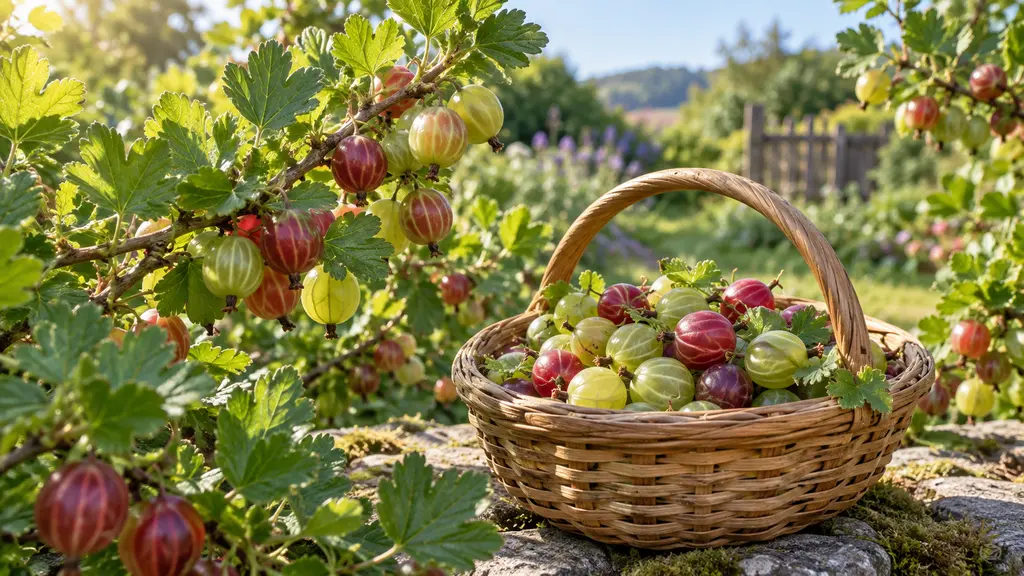
Plan gooseberries for tested jam, jelly, and preserve recipes while keeping cultivar, ripeness, disease resistance, and volume-based yield visible.
Your growing location
Hardiness zone describes winter minimum temperature. It does not replace frost dates, day length, soil temperature, or current weather.
Nothing is shared until you choose a lookup button. ZIP lookup uses PHZMAPI. “Use my location” sends coordinates to BigDataCloud only to obtain a ZIP, then sends that ZIP to PHZMAPI; coordinates are not stored by this site.
Verify the result on the official USDA 2023 map; manual override always remains available.
Plants and space calculator
Space by planting style
Preservation-suitable variety direction
Zone is only one factor. Day length, disease pressure, storage quality, maturity, and use may be more important.
Disease-resistant American or hybrid gooseberries
Choose locally legal cultivars with powdery-mildew and white-pine-blister-rust resistance where relevant.
Planting and indoor-start timing
Plant after temperatures below 20°F are unlikely and while soil is workable, early enough to avoid heat stress. Verify local Ribes restrictions before purchasing.
Current weather is not loaded automatically; check the local forecast and soil before planting.
Canning recipes using gooseberries
No linked published recipes found yet.
Sources, formulas, and limits
Plants = household annual target ÷ selected yield per plant, rounded up. Area or row units = target ÷ compatible cited yield, rounded up. “Typical” uses the cited midpoint.
University of Minnesota Extension currant and gooseberry guidance