The best vegetables for home
Key takeaways
- Choose the tested recipe before choosing the variety.
- Low-acid vegetables generally require pressure
canning unless a tested acidified recipe says otherwise. - Concentrated harvests suit batch processing; staggered harvests suit smaller kitchens.
- Productivity per square foot matters less than producing the correct quality at a manageable time.
Home-canning safety: Use a current, research-tested recipe from the National Center for Home Food Preservation, USDA, a university Extension program, Ball, or Bernardin. Do not change jar size, ingredient proportions, acidity, processing time, pressure, or altitude adjustment.
How to choose a vegetable for canning
Start with four questions: Will the household eat it? Is there a tested recipe for the finished product? Will the crop grow reliably in your climate? Can you process the harvest promptly? A productive crop is not useful if its desired preparation lacks a tested home-canning process.
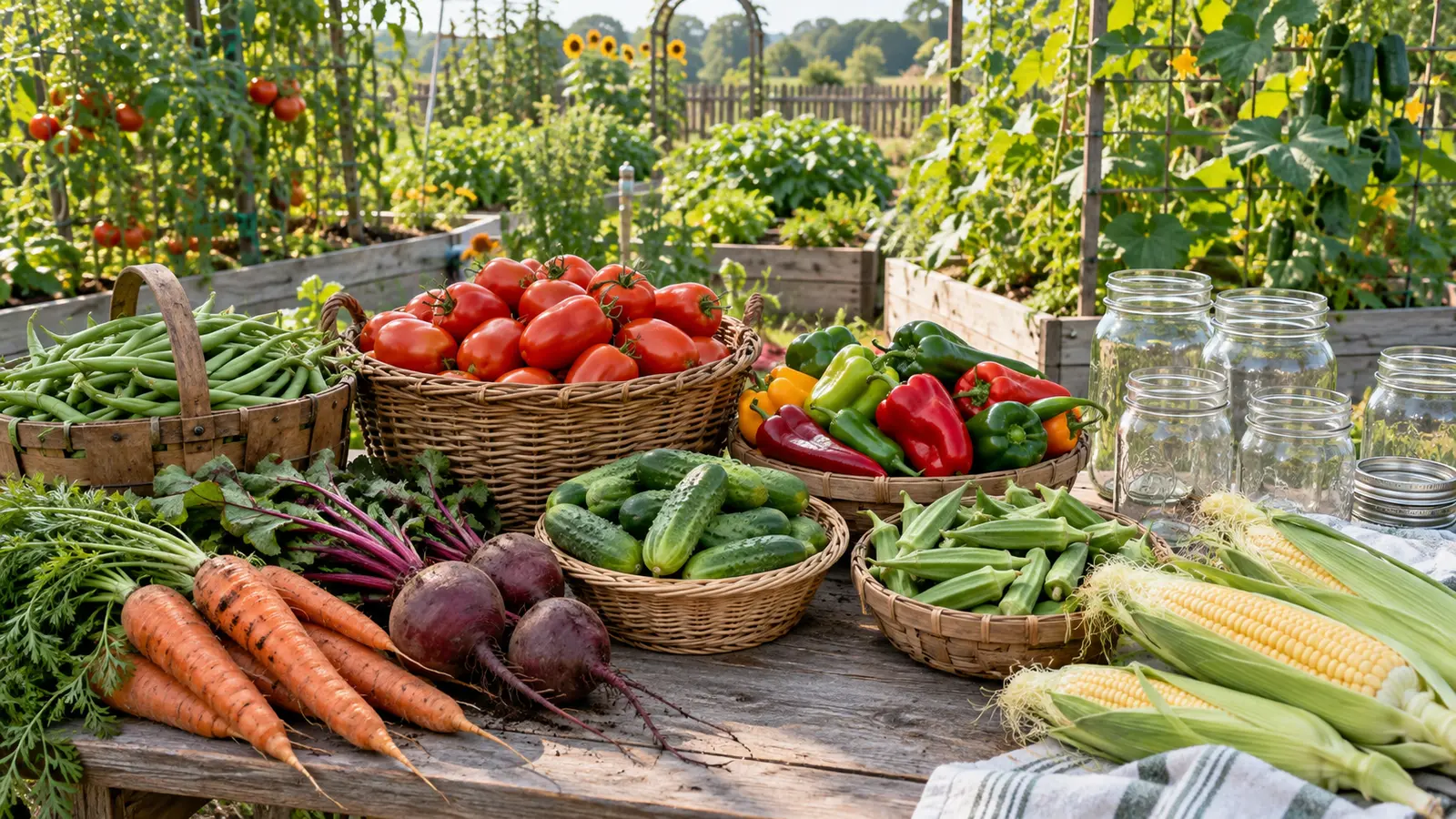
Vegetables that earn space in a canning garden
| Crop | Useful traits | Preservation fit | Planner |
|---|---|---|---|
| Tomatoes | Meaty, disease resistant; determinate types concentrate harvest | Tested tomato products, sauces, salsas and relishes; required acidification still applies | Tomato planner |
| Green beans | Tender straight pods; bush types concentrate harvest | Pressure-canned beans or tested pickles | Bean planner |
| Pickling cucumbers | Small seed cavity, crisp texture, frequent harvest | Tested pickles and relishes | Cucumber planner |
| Peppers | Firm walls, consistent heat and mature color | Pressure-canned peppers or tested pickles, salsas and relishes | Pepper planner |
| Carrots and beets | Uniform roots, good color, tender at harvest | Pressure-canned plain roots or tested pickles | Carrot · Beet |
| Peas and corn | Processed quickly at peak tenderness | Pressure | Pea · Corn |
| Okra | Tender young pods, frequent picking | Pressure-canned or tested pickled okra | Okra planner |
| Potatoes | Sound mature tubers; waxy types often hold shape | Pressure-canned only in tested preparations | Potato planner |
Determinate or indeterminate tomatoes?
Determinate tomatoes tend to ripen in a shorter window, which helps when a sauce recipe needs a large quantity at once. Indeterminate plants spread production over a longer season. Neither growth habit changes the tested recipe.
Variety traits worth prioritizing
- Disease resistance reduces the risk of losing a large planting.
- Uniform size simplifies preparation and jar packing.
- Fleshiness can reduce cooking time for tomato products.
- Concentrated maturity supports large batches.
- Extended harvest supports small batches and fresh eating.
Vegetables with limited canning options
Broccoli, cauliflower, eggplant, summer squash and leafy crops may have few desirable or current tested
Planning yield and space
Use conservative local yield ranges and your own records. Weather, cultivar, fertility, irrigation, pests and harvest frequency can change output. The Canning Garden Planner compares plants, row feet and square-foot approaches. Add fresh-eating needs and a realistic crop-loss allowance without changing recipe proportions.
Frequently asked questions
Which vegetables must be pressure canned?
Plain low-acid vegetables require pressure
Are heirloom vegetables better for canning ?
Not automatically. Flavor can be excellent, but disease resistance, uniformity, yield and the intended product matter too.
Can any tomato be canned?
Use sound tomatoes and a tested tomato recipe, including its required bottled lemon juice, citric acid or other acidification.
What is the most space-efficient canning crop?
It depends on climate and what you eat. Trellised beans and cucumbers can be efficient, while tomatoes often provide more desired products per plant.
Can I combine extra vegetables in a jar?
Only when the exact combination and proportions appear in a tested recipe.
Sources and methodology
Horticultural reference: The University of Minnesota Extension tomato guide documents determinate and indeterminate growth, disease-resistance considerations, spacing, harvest cues, and the usefulness of bush types for a concentrated
Recommendations combine crop characteristics and conservative planning ranges with the food-safety principles in the NCHFP canning guidance. Consult local government or university horticultural guidance for planting dates and locally adapted varieties. See Canning Safety and Methodology.
Prepared by the