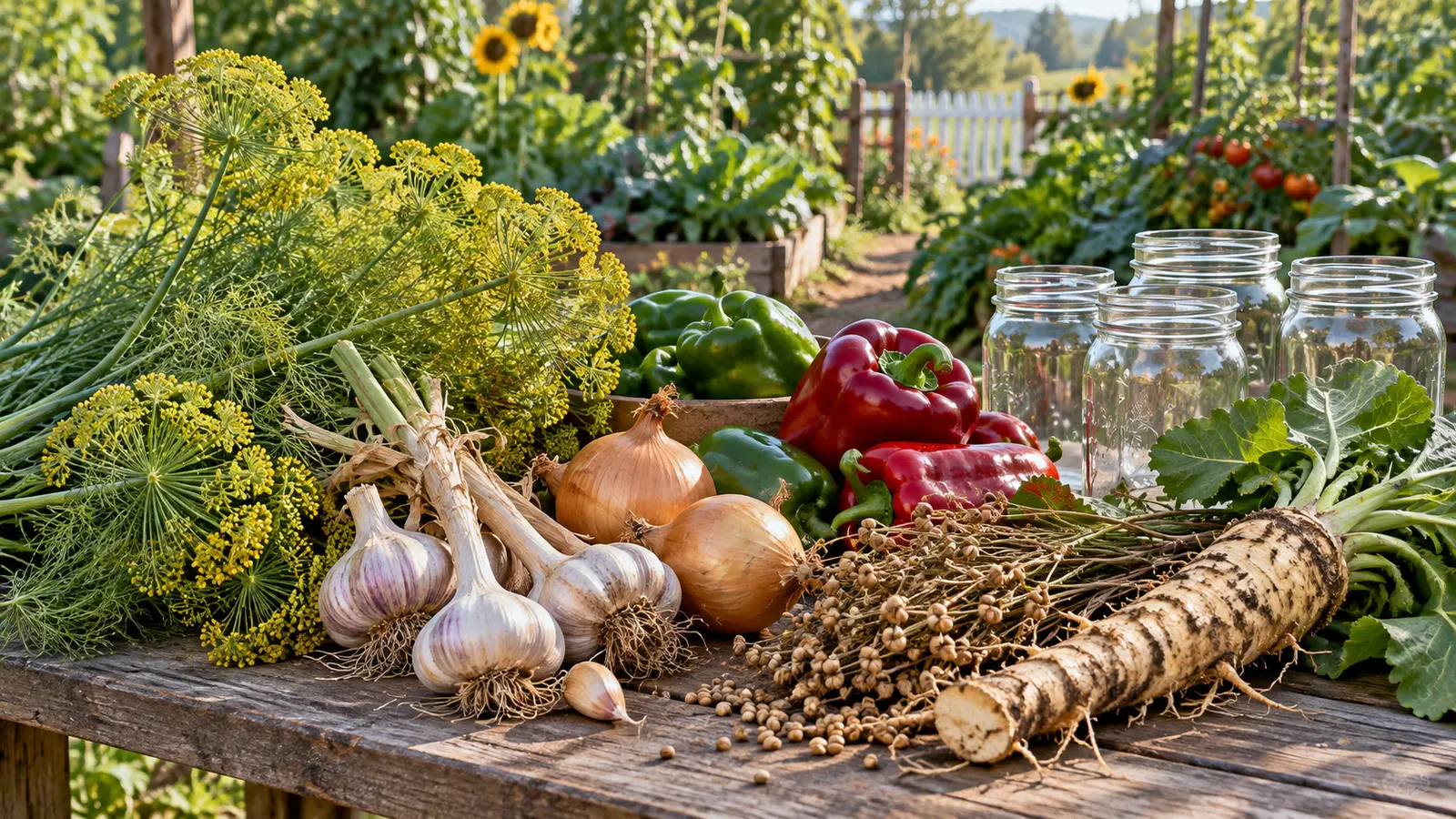
The most useful flavoring crops for a home-canning garden are dill, garlic, onions, hot and sweet peppers, mustard seed and horseradish. Grow quantities based on tested recipes and normal kitchen use. Flavor crops are powerful, but fresh herbs and low-acid vegetables cannot be added freely to shelf-stable foods.
Key takeaways
- Choose tested recipes before calculating crop quantities.
- Dried spices may be adjustable only where authoritative guidance permits; fresh herbs and low-acid vegetables are different.
- Stagger dill sowings so flower heads overlap cucumber harvest.
- Freeze or dehydrate surplus rather than improvising a
canning formula.
Safety: Follow a current tested recipe from NCHFP, USDA, Extension, Ball or Bernardin. Do not change low-acid ingredient amounts, acidity, jar size or processing.
High-value flavor crops
| Crop | Useful harvest | Planning approach |
|---|---|---|
| Dill | Leaves, flower heads and mature seed | Sow small successions to overlap cucumber harvest |
| Garlic | Mature cured bulbs | Count cloves per tested batch plus fresh use and seed stock |
| Onions | Bulbs at recipe-specified size | Use exact recipe quantities; grow storage types for long use |
| Peppers | Green or fully colored sweet and hot fruit | Choose heat, wall thickness and maturity window |
| Mustard | Mature dry seed | A small patch can supply substantial seed |
| Horseradish | Dormant-season roots | Contain spreading roots and use sound material |
Dill for pickle season
Dill timing is often harder than growing dill. Pickling cucumbers can begin before one planting develops usable flower heads. Sow several small plantings rather than one large block and use local bloom timing. Substitute dill forms only when the tested recipe permits it.
Garlic and onions
Garlic and onions are low-acid vegetables. Extra cloves or bulbs change the product; do not treat them like dry spice. Use the exact form and quantity specified. Cure storage crops appropriately and reject moldy, soft or damaged bulbs.
Peppers: flavor, heat and harvest window
Sweet and hot peppers can serve tested pickles, relishes and salsas or be pressure canned under a tested plain-pepper process. Heat varies with genetics and conditions. Substitute varieties only within the exact recipe’s stated limits; total pepper quantity and preparation still matter.
See the Pepper Planner, Onion Planner and complete planner directory.
Fresh herbs are not dry spices
Fresh basil, cilantro, oregano and other herbs contain water and plant tissue. They cannot automatically replace dried seasoning. When a research source permits dried-spice adjustments, follow its limits. Add fresh herbs after opening the jar when you want brighter flavor without altering the canned product.
How much should a household grow?
Multiply the amount used per tested batch by planned batches, then add fresh cooking, drying, freezing and seed-saving needs. Add a modest crop-loss allowance, but never increase the amount placed in each jar.
Frequently asked questions
Can I add extra garlic to pickles?
Use the tested amount unless its authoritative source explicitly permits the change.
Can fresh dill replace seed?
Not by guesswork. Use the specified ingredient or an approved substitution.
What should I do with extra herbs?
Dry, freeze or use them fresh; add fresh herbs after opening canned food.
Can I can garlic or herbs in oil?
Do not create a shelf-stable oil mixture without a specific research-tested process. Refrigeration or freezing is generally appropriate.
Sources and methodology
Horticultural reference: The University of Minnesota Extension garlic guide supports variety, spacing, climate adaptation, harvest-cue, curing, and storage guidance. Planting and harvest calendars must be adjusted to the reader’s climate and local Extension recommendations.
Guidance follows NCHFP canning principles and the site’s Canning Safety and Methodology policies. Use local horticultural guidance for planting dates.
Prepared by the