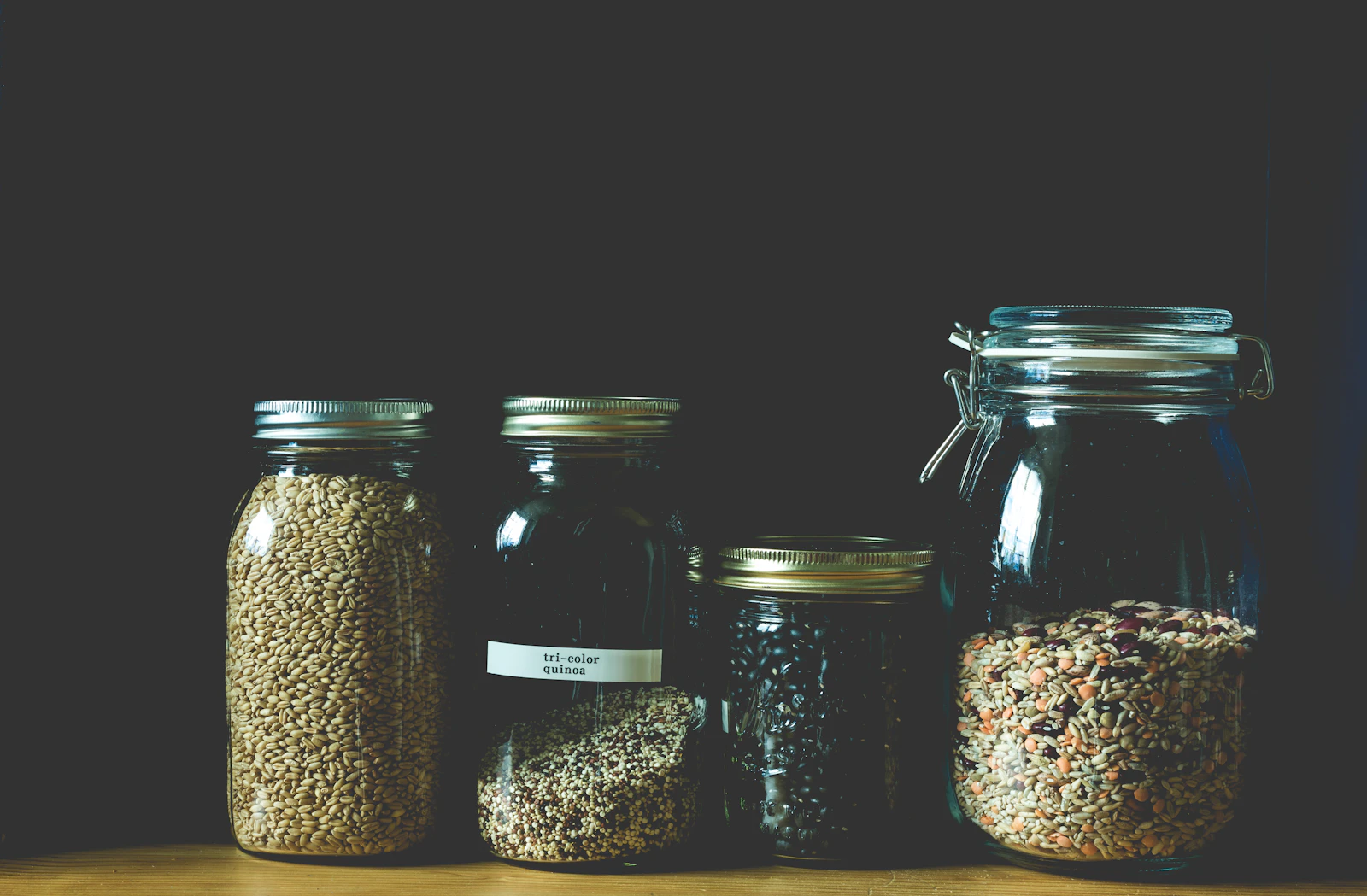
Dry mixes can turn shelf-stable ingredients into convenient meals without attempting unsafe “canning” of bread, cake, pasta, dairy or thickened foods. Combine ingredients that are already dry and shelf-stable, protect them from moisture and pests, and cook the finished food normally when needed.
What belongs in a dry mix?
Use commercially dried ingredients or properly home-dehydrated foods that are fully dry before packaging. Keep wet, oily or perishable ingredients out of the storage jar. Fresh cheese, meat, eggs, butter and liquid flavorings belong on an attached preparation label and are added only when the mix is cooked.
Do not seal partially dried ingredients into a reduced-oxygen package. A vacuum seal or oxygen absorber does not make inadequately dried food safe.
Baking mixes
A dry baking mix is a safe alternative to “canning” bread or cake in jars. Utah State University Extension advises placing only dry ingredients in the jar, attaching the wet ingredients and complete baking directions, and baking later in an ordinary pan rather than in the storage jar.
Beverage and dessert mixes
Use only ingredients that remain shelf-stable together. Prevent moisture cross-contact with completely dry utensils. Milk powder, cocoa, sugar and flavoring powders can have different storage lives, so the shortest-lived ingredient should determine rotation.
Rice, pasta and side-dish mixes
Package dry grains or pasta with dehydrated vegetables and seasonings. Use separate inner packets when ingredients require different cooking times. State the exact water amount, cooking method, minimum cooking time, yield and ingredients to add.
Seasoning blends
Use fully dried herbs and spices, avoid introducing steam by measuring over a hot pot, and store away from light and heat. Date blends and make quantities small enough to retain good flavor.
Soup, stew and chili mixes
Use thoroughly dried beans, grains, pasta, vegetables, herbs and seasonings. Add fresh meat and other moist ingredients only during cooking. Separate quick-cooking pasta or dairy powder when necessary. Beans must be fully cooked before serving; soaking and cooking instructions belong on the label.
Packaging checklist
- Start with ingredients that are dry and shelf-stable.
- Use a clean, completely dry, food-grade container.
- Keep the rim and seal area free of powder.
- Use an oxygen absorber only when appropriate; it does not replace proper drying.
- Label the mix, packed date, allergens, wet ingredients, complete cooking directions and yield.
- Store cool, dry and dark; rotate oldest first.
- Discard mixes with moisture, mold, insects, damaged packaging or abnormal odor.
Avoid these mistakes
- Do not oven-process sealed jars of flour, grains or mixes.
- Do not call room-temperature vacuum sealing “canning.”
- Do not package warm dehydrated ingredients.
- Do not assume a decorative lid creates a moisture barrier.
Research-based resources
- USU Extension: Canning Bread or Cake Is Unsafe
- USU Extension: Making and Using Master Mixes
- USU Extension: Soup and Artisan Bread Mixes
- USU Extension: Packaging Foods
Editorially reviewed September 23, 2026. This is pantry-storage guidance, not a
Questions or results?
Discuss this recipe with the canning community. Community comments do not replace the tested source or safety classification shown on this page.
Join the discussion
Please log in or create a free account to discuss this recipe. You will return here afterward.