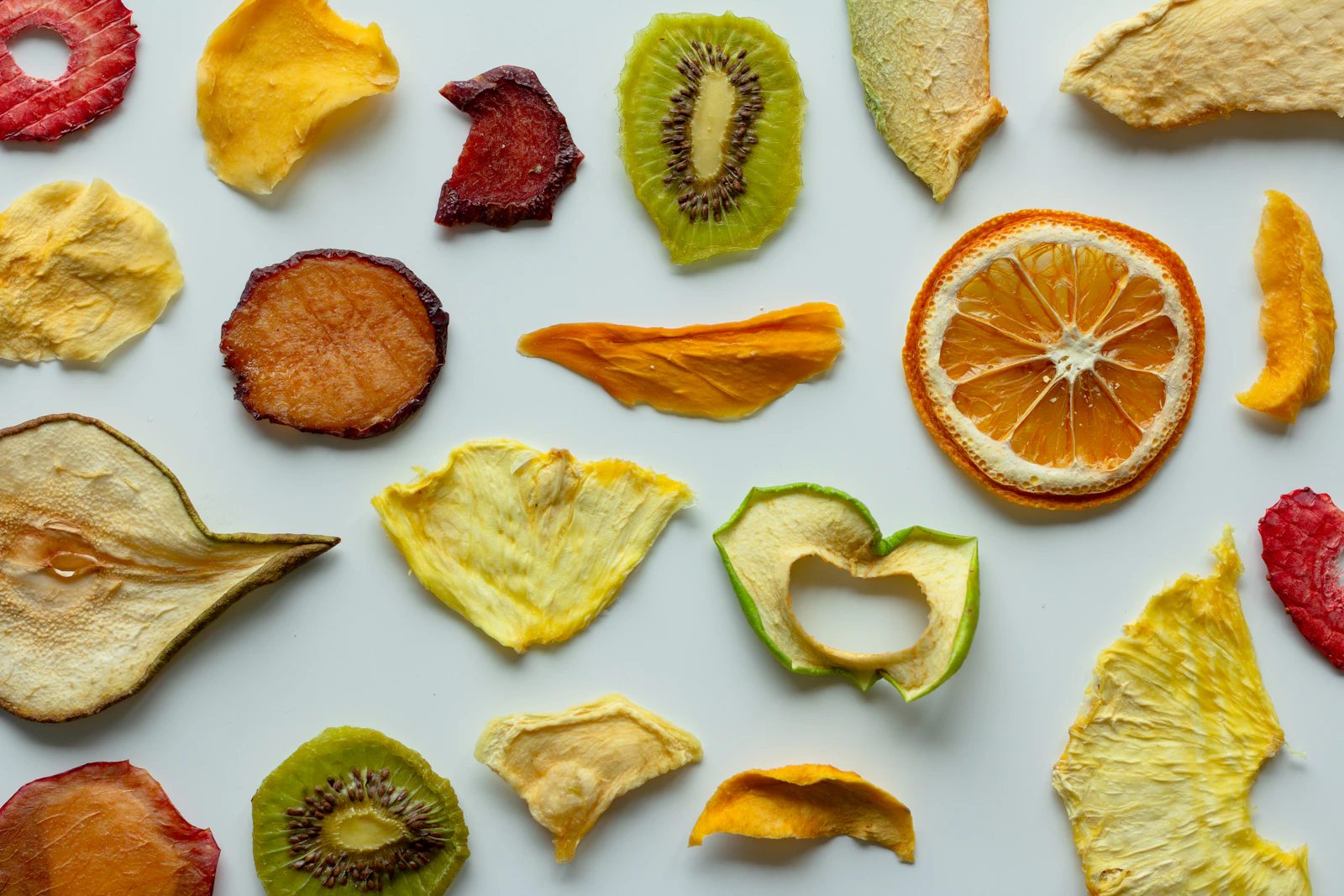
Freeze-drying removes frozen water by sublimation under vacuum. It can preserve texture and flavor well, but it is not a kill step. Utah State University Extension emphasizes that freeze-drying does not reliably destroy bacteria. Food unsafe before drying can remain unsafe afterward, and moisture entering damaged packaging can allow surviving microorganisms to become active again.
The central safety rule
Freeze-dry safe food, not questionable food. Begin with wholesome ingredients, use sanitary preparation, control cross-contamination and cook foods that require cooking before they are eaten. Do not use freeze-drying to rescue spoiled food or bypass safe handling of meat, eggs, dairy or prepared meals.
Freeze-dried fruits and vegetables
Wash produce under clean running water and discard spoiled portions. Prepare uniform pieces so the batch dries consistently. Some foods benefit from blanching or pretreatment for quality. Verify dryness in the thickest and coldest pieces, not only at tray edges.
Freeze-dried meat, eggs and dairy
These foods require strict sanitation and temperature control. Use pasteurized dairy and egg products when appropriate, prevent raw-to-ready-to-eat cross-contamination, and cook meat or meals according to safe minimum-temperature guidance before consumption. Freeze-drying does not make raw animal foods ready to eat.
Fat does not freeze-dry. High-fat foods may become rancid and dry unevenly, so choose suitable formulations and rotate them sooner.
Freeze-dried complete meals
Use ingredients that dry and rehydrate predictably. Cut pieces uniformly, avoid excessive surface fat, and record the recipe, cooked yield, tray load and drying cycle. Label every package with rehydration directions and any required final cooking step. Test a small batch before producing a large quantity.
Freeze-dried candy and specialty foods
Candy may change texture dramatically, but it is not automatically a long-term storage food. High-fat products can become rancid and all freeze-dried candy can absorb moisture quickly after opening. Package small portions and rotate for quality.
Confirm dryness before packaging
- Do not rely only on the machine’s completion signal.
- Break or cut the thickest pieces and check the center for cold, softness, ice or moisture.
- Add drying time when pieces are not uniformly dry.
- Keep trays and tools clean and dry.
- Package promptly in a moisture- and oxygen-resistant container.
Packaging and storage
Properly dried food may be vacuum packaged or packaged with an appropriate oxygen absorber, but neither method compensates for residual moisture. Label the food, date, batch, allergens, preparation state and rehydration or cooking directions. Store cool, dry and dark.
When to discard
Discard food with a failed or punctured package, moisture, mold, unexplained discoloration, insect activity, abnormal odor or uncertain processing history. Do not taste questionable food. Refrigerate or freeze an incompletely dried batch promptly rather than sealing it for pantry storage.
Research-based resources
- USU Extension: Can I Freeze-Dry That?
- USU Extension: Freeze-Drying Resources
- USU Extension: Buying a Home Freeze-Dryer
- USU Extension: Tools and Supplies
Editorially reviewed September 23, 2026. Follow current equipment instructions together with research-based food-safety guidance.
Questions or results?
Discuss this recipe with the canning community. Community comments do not replace the tested source or safety classification shown on this page.
Join the discussion
Please log in or create a free account to discuss this recipe. You will return here afterward.