(function(){function place(){var root=document.currentScript&&document.currentScript.parentElement;if(!root)return;var card=root.querySelector(‘.wprm-recipe-snippet,.wprm-recipe-container’);var nav=root.querySelector(‘.recipe-quick-nav’);if(card&&nav&&card.nextElementSibling!==nav)root.insertBefore(card,nav);}if(document.readyState===’loading’)document.addEventListener(‘DOMContentLoaded’,place);else place();})();
Spiced crab apples — NCHFP
Ingredients
- 5 lbs crabapples
- 4 1/2 cups apple cider vinegar (5%)
- 3 3/4 cups water
- 7 1/2 cups sugar
- 4 tsp whole cloves
- 4 sticks cinnamon
- 6 1/2-inch cubes fresh ginger root
Equipment
- 1 Boiling-water bath canner with rack
- 1 Large stainless or enamel preserving pot
- 1 Canning jars with two-piece lids
- 1 Headspace and bubble tool
Directions
- Remove blossom petals and wash the crabapples, leaving the stems attached. Puncture each apple’s skin four times with an ice pick or toothpick.
- Combine the vinegar, water and sugar and bring to a boil. Tie the cloves, cinnamon and fresh ginger in a spice bag or cheesecloth and add it to the syrup.
- Using a blancher basket or sieve, immerse one-third of the apples at a time in the boiling vinegar-syrup solution for 2 minutes.
- Place the cooked apples and spice bag in a clean 1- or 2-gallon crock and add the hot syrup. Cover and let stand overnight.
- The next day, remove the spice bag. Drain the syrup into a large saucepan and reheat it to boiling.
- Fill clean pint jars with the apples and hot syrup, leaving 1/2-inch headspace. Apply the lids.
- Process pint jars in a boiling-water canner for 20 minutes at 0–1,000 feet, 25 minutes at 1,001–3,000 feet, 30 minutes at 3,001–6,000 feet, or 35 minutes above 6,000 feet.
Recipe Notes
Private Notes
Questions or results?
Discuss this recipe with the canning community. Community comments do not replace the tested source or safety classification shown on this page.
Join the discussion
Please log in or create a free account to discuss this recipe. You will return here afterward.
Tried this recipe?
Share your results how it turned out.Safety classification
Tested NCHFP home-canning recipe.
Processing details
Method: Boiling water bath. Two-day hot-pack fruit pickle; pint jars; 1/2-inch headspace; about 9 pints.
Tested source
Preparation timeline
Day 1: prepare and puncture crabapples, cook in spiced syrup, and hold overnight as directed. Day 2: reheat syrup and fruit, hot-pack, process, and cool.
Equipment
Boiling-water canner, pint jars, jar lifter, funnel, bubble remover, saucepan, spice bag, and skewer or needle.
Visual method guide
- Prepare and accurately measure the ingredients.
- Fill the approved jars at the stated headspace.
- Process by elevation and cool upright, undisturbed.
Safety essentials
Use apple cider vinegar labeled 5% acidity, keep tested proportions unchanged, and complete the full overnight two-day procedure.
About this recipe
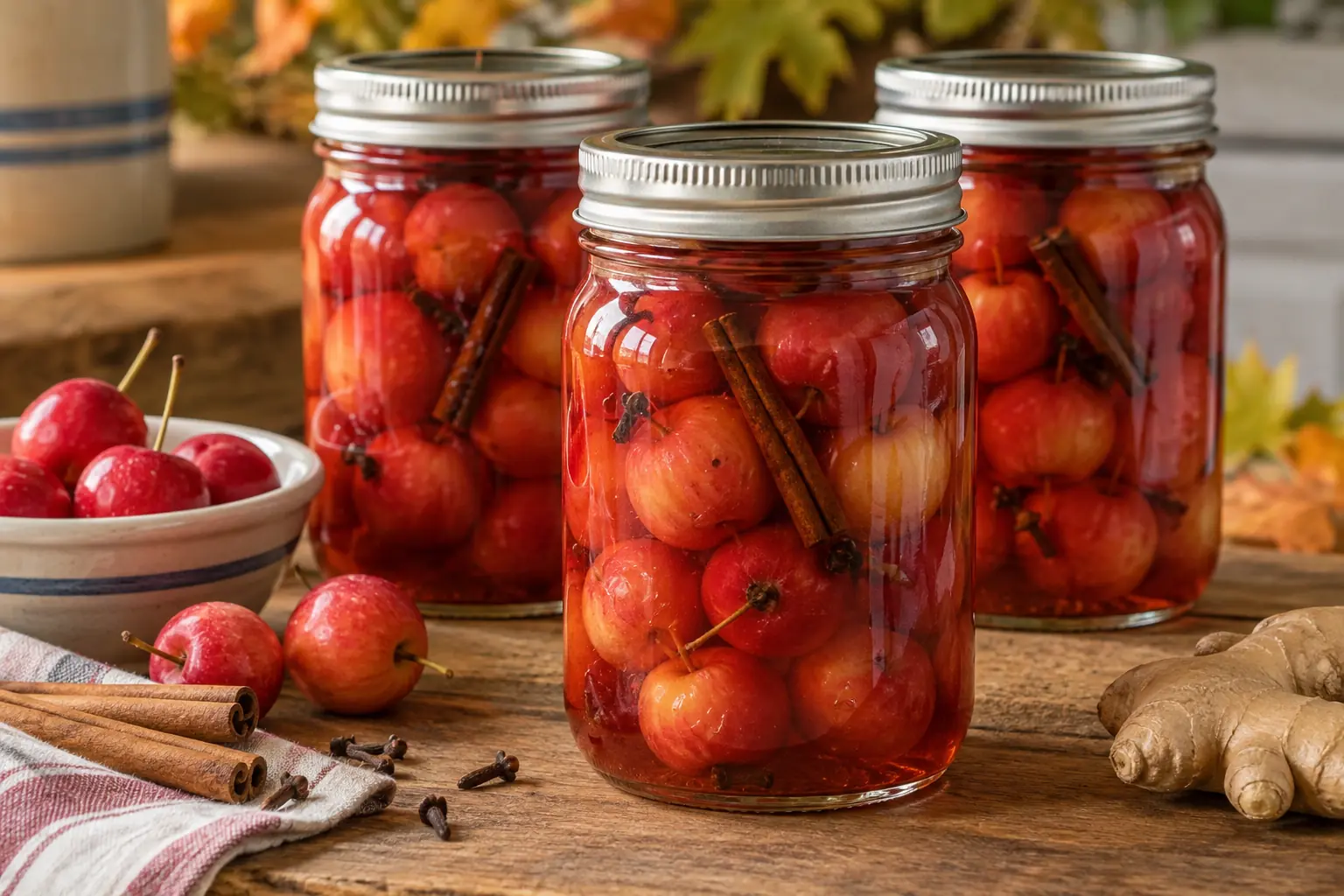
Whole crabapples preserved in a spiced cider-vinegar syrup with cinnamon, cloves, and fresh ginger.
Before you begin
Leave stems attached, remove blossom petals, and puncture each crabapple skin four times so fruit heats and absorbs syrup evenly.
Altitude/pressure schedule
| Elevation | Pints |
|---|---|
| 0–1,000 ft | 20 min |
| 1,001–3,000 ft | 25 min |
| 3,001–6,000 ft | 30 min |
| Above 6,000 ft | 35 min |
Serving suggestions
Serve as a spiced fruit accompaniment to roasted meats or cheese.
FAQ
Can the overnight step be skipped? No. It is part of the tested two-day method.
Recipe context and comparison
This whole-fruit pickle is distinct from crabapple jelly or butter and uses a four-band altitude schedule.
Troubleshooting
Puncture skins as directed to reduce splitting; handle softened fruit gently during the second-day hot pack.
Source and provenance
Safety-critical values remain tied to the original NCHFP source.
Garden planning for this recipe
Plant, space, variety, zone, and timing estimates live on dedicated ingredient pages:
How much of the main ingredient should I grow?
Varies by mature crabapple tree; not calculated
This recipe does not have a reliable garden conversion. Plan a purchase or harvest separately, and do not use garden estimates to alter the tested recipe.
Garden yields vary by cultivar, climate, soil, pests, and care. Always measure the exact prepared ingredient amount required by the tested canning recipe.