Safety classification
Tested
Testing authority: National Center for Home Food Preservation (University of Georgia / USDA-derived guidance)
Safety reviewed: 09/09/2026
Processing details
Altitude adjustment: Dial gauge: 11 psi at 0–2,000 ft; 12 psi at 2,001–4,000 ft; 13 psi at 4,001–6,000 ft; 14 psi at 6,001–8,000 ft. Weighted gauge: 10 psi at 0–1,000 ft; 15 psi above 1,000 ft.
Source & provenance
Safety classification: Tested recipe from NCHFP.
Oysters canning safety
| Method | Pressure |
|---|---|
| Pack | Prepared oyster meat with hot water |
| Jar sizes | Half-pints or pints |
| Headspace | 1 inch |
| Yield/limit | Use live safe shellfish and listed jar sizes |
Safety boundary: Do not skip live-shellfish handling or preparation, use larger jars, or water-bath can.
Processing details
- Method
- Pressure
- Pack style
- Hot
- Jar sizes
- Half-Pint or Pint Jars
- Headspace
- 1 inch
- Processing time
- Half-pints or pints: 75 min
Tested recipe source: National Center for Home Food Preservation (NCHFP)
Oysters timeline
- Prepare: Keep live oysters on ice, discard questionable shellfish, and complete the tested heating and salt-water washing steps.
- Pack: Pack prepared oyster meat with hot water and leave 1-inch headspace.
- Process: Pressure-can half-pints or pints for 75 minutes.
Equipment for oysters
Affiliate disclosure: Equipment links may earn a commission at no added cost; safety guidance is independent.
- Pressure canner with rack and tested dial or weighted gauge
- Half-pints or pints Mason jars with two-piece lids
- Large pot,
canning funnel, jar lifter, headspace tool, and bubble remover
Visual method guide
- Keep live oysters safely chilled.
- Complete the tested heating and shucking step.
- Wash oyster meat in the specified salt water.
- Pack with hot water and pressure-can 75 minutes.
The official source and WPRM recipe card remain authoritative.
Safety essentials
Tested NCHFP pressure-canning procedure. Use only half-pint or pint jars and retain the documented salt-water washing step.
What is oysters?
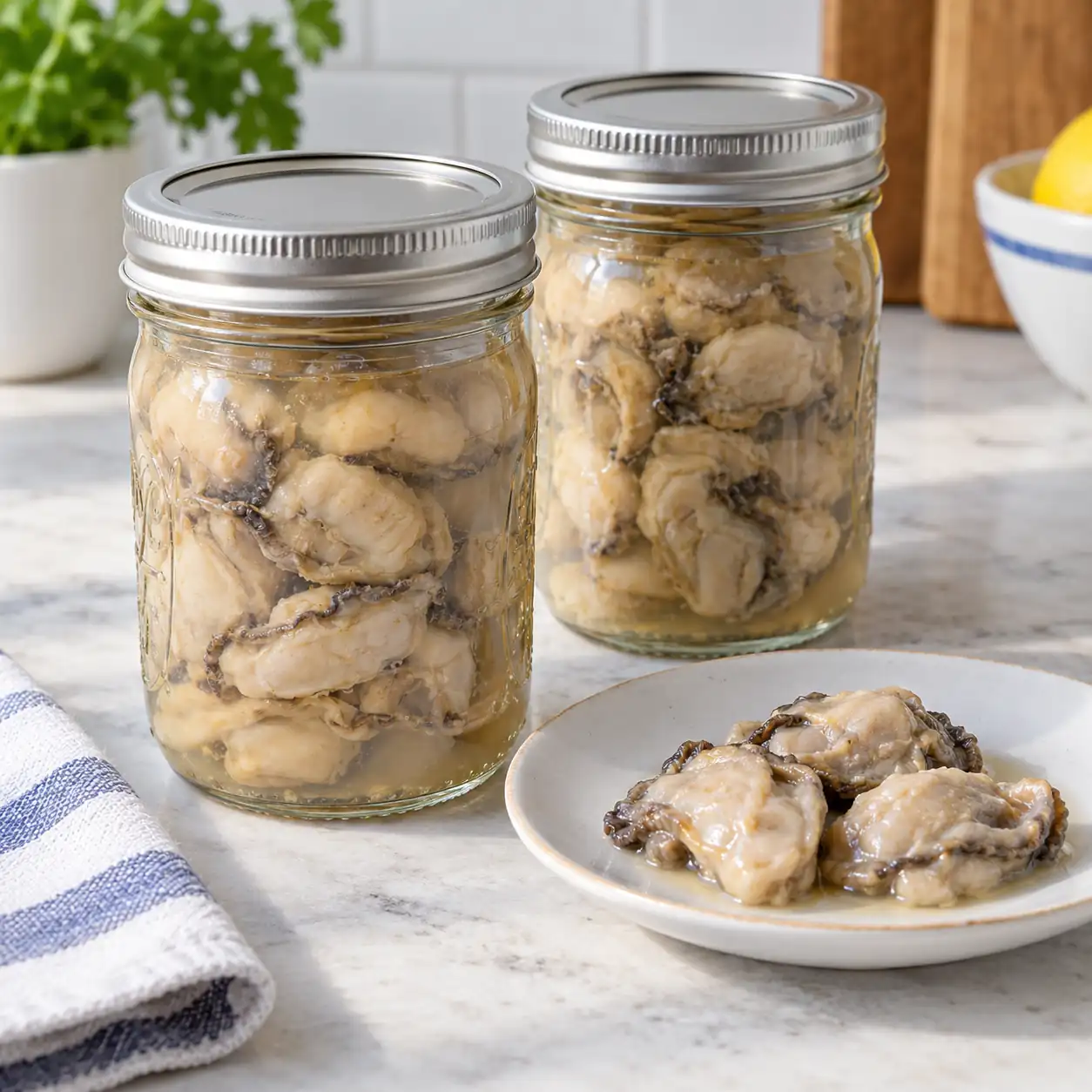
This tested process pressure cans properly handled and prepared oyster meat in hot water.
Before you begin
- Use only safe live shellfish.
- Follow the oven-heating and salt-water wash exactly.
- Use half-pints or pints only.
Altitude-adjusted pressure schedule
| Jar/product | Time | 0–2,000 ft | 2,001–4,000 ft | 4,001–6,000 ft | 6,001–8,000 ft |
|---|---|---|---|---|---|
| Half-pints or pints | 75 min | 11 psi | 12 psi | 13 psi | 14 psi |
| Jar/product | Time | 0–1,000 ft | Above 1,000 ft |
|---|---|---|---|
| Half-pints or pints | 75 min | 10 psi | 15 psi |
Oysters — NCHFP
Ingredients
- live oysters keep on ice until ready to can
- 1/2 cup salt per gallon of wash water
- 1/2 tsp salt optional per pint
- hot water for filling jars
Equipment
- 1 Pressure canner Dial- or weighted-gauge pressure canner appropriate for altitude.
- As needed Canning jars Half-pints or pints only.
- As needed Two-piece canning lids Use new flat lids and prepare according to manufacturer directions.
Directions
- Keep live oysters on ice until ready to can. Wash shells.
- Heat oysters 5 to 7 minutes in a preheated 400°F oven. Cool briefly in ice water, drain, open shells, and remove the meat.
- Wash oyster meat in water containing 1/2 cup salt per gallon, then drain.
- Fill half-pint or pint jars with oyster meat and hot water, leaving 1-inch headspace. Add 1/2 teaspoon salt per pint if desired.
- Pressure process half-pints or pints for 75 minutes.
- Dial gauge: 11/12/13/14 psi at 0–2,000/2,001–4,000/4,001–6,000/6,001–8,000 ft. Weighted gauge: 10 psi through 1,000 ft and 15 psi above 1,000 ft.
Recipe Notes
Private Notes
Questions or results?
Discuss this recipe with the canning community. Community comments do not replace the tested source or safety classification shown on this page.
Join the discussion
Please log in or create a free account to discuss this recipe. You will return here afterward.
Tried this recipe?
Share your results how it turned out.How to serve oysters
Use in stews, chowders, stuffing, fritters, casseroles, and sauces after thorough heating.
Oysters questions
Can quart jars be used?
No. Use half-pints or pints only.
Can I use a boiling-water canner?
No. This low-acid food requires pressure
What if pressure drops?
Restore the required pressure and restart the full processing time.
Canned oysters versus fresh oysters
Home-canned oysters are fully processed shelf-stable seafood and have a cooked texture; they are not a substitute for raw service.
Oysters troubleshooting
What if an oyster seems questionable before preparation?
Discard it; do not can questionable shellfish.
What if a jar does not seal?
Refrigerate promptly or follow authoritative reprocessing guidance within the permitted time.
Source & provenance
NCHFP, “Oysters”. Adapted from the USDA Complete Guide to Home
Editorial review: Supporting blocks checked against the official source on September 20, 2026. The WPRM recipe card was preserved.
Typical canning season
Season: All Year
Months: January, February, March, April, May, June, July, August, September, October, November, December
How much of the main ingredient should I grow?
Not applicable as a garden crop; plan purchases or harvest separately
This recipe does not have a reliable garden conversion. Plan a purchase or harvest separately, and do not use garden estimates to alter the tested recipe.
Garden yields vary by cultivar, climate, soil, pests, and care. Always measure the exact prepared ingredient amount required by the tested canning recipe.