Safety classification
Tested
Testing authority: National Center for Home Food Preservation (University of Georgia / USDA-derived guidance)
Safety reviewed: 09/13/2026
Processing details
Source & provenance
Key takeaways
- Tested NCHFP apple butter — a traditional spiced apple butter from the National Center for Home Food Preservation.
- Preserved by boiling-water
canning for shelf-stable jars. - Hot pack into half-pint or pint jars, leaving 1/4-inch headspace.
- Process 5 minutes at 0–1,000 ft, 10 minutes at 1,001–6,000 ft, or 15 minutes above 6,000 ft (pre-sterilize jars for the 5-minute process).
Safety summary
Use vinegar labeled 5% acidity and retain the tested apple, cider, vinegar, sugar, and spice proportions.
Tested source
Safety status: Tested authoritative recipe. Original source. Use vinegar labeled 5% acidity and retain the tested apple, cider, vinegar, sugar, and spice proportions.
Preparation timeline
- Prepare clean jars, cookware, and ingredients.
- Cook apples in cider and vinegar, sieve, then cook with sugar and spices until the butter mounds on a spoon with no liquid rim.
- Fill half-pints or pints, leaving 1/4 inch headspace.
- 5 minutes at 0–1,000 ft; 10 minutes at 1,001–6,000 ft; 15 minutes above 6,000 ft. Pre-sterilize jars for the 5-minute process.
Equipment
Boiling-water canner, nonreactive cookware, preparation tools, jar lifter, and half-pints or pints.
Visual method guide
- Prepare: Follow the source-specific preparation.
- Pack: Hot pack; 1/4 inch.
- Process: 5 minutes at 0–1,000 ft; 10 minutes at 1,001–6,000 ft; 15 minutes above 6,000 ft. Pre-sterilize jars for the 5-minute process.
- Check: Discard any product showing spoilage.
Safety essentials
Use vinegar labeled 5% acidity and retain the tested apple, cider, vinegar, sugar, and spice proportions.
About this recipe
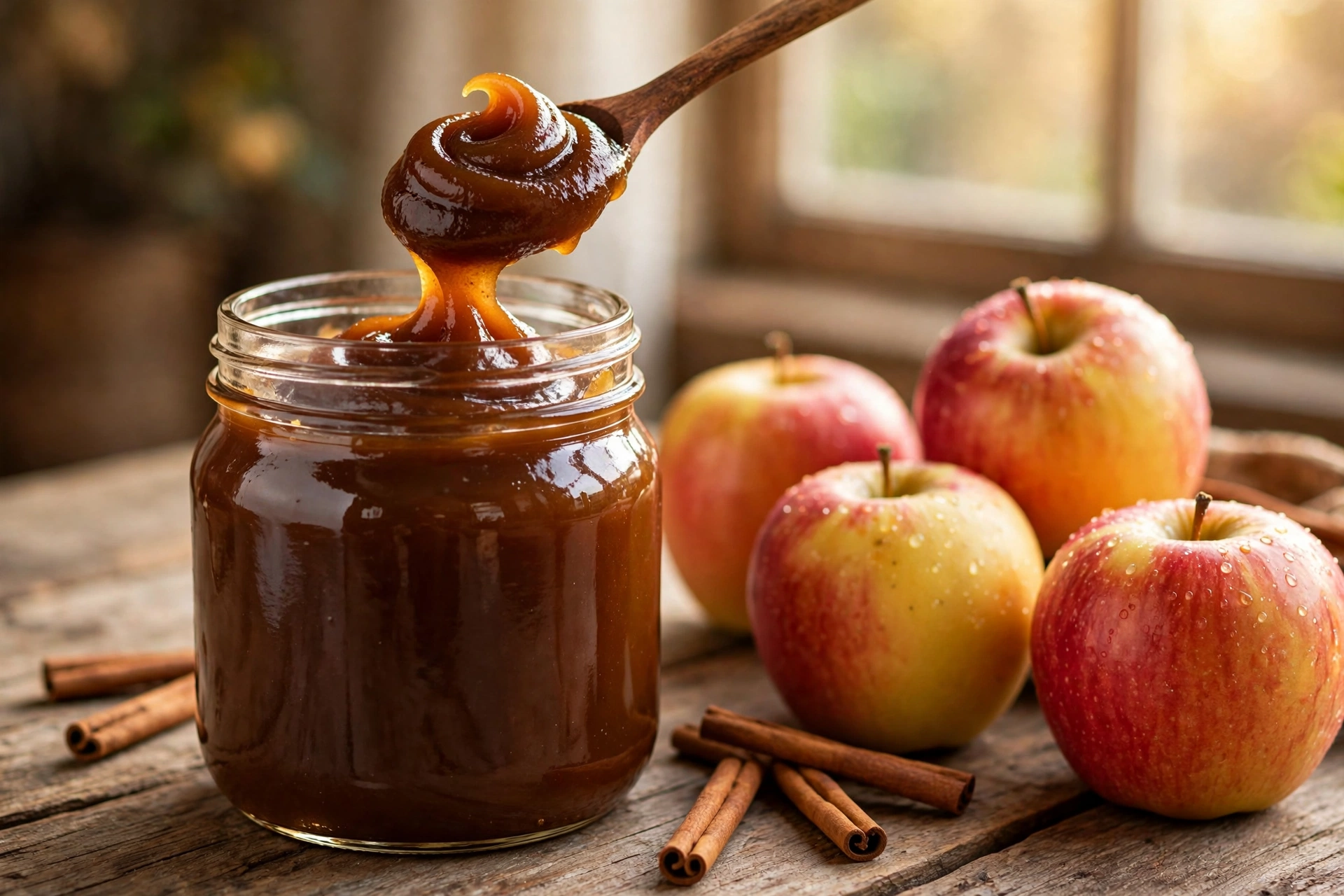
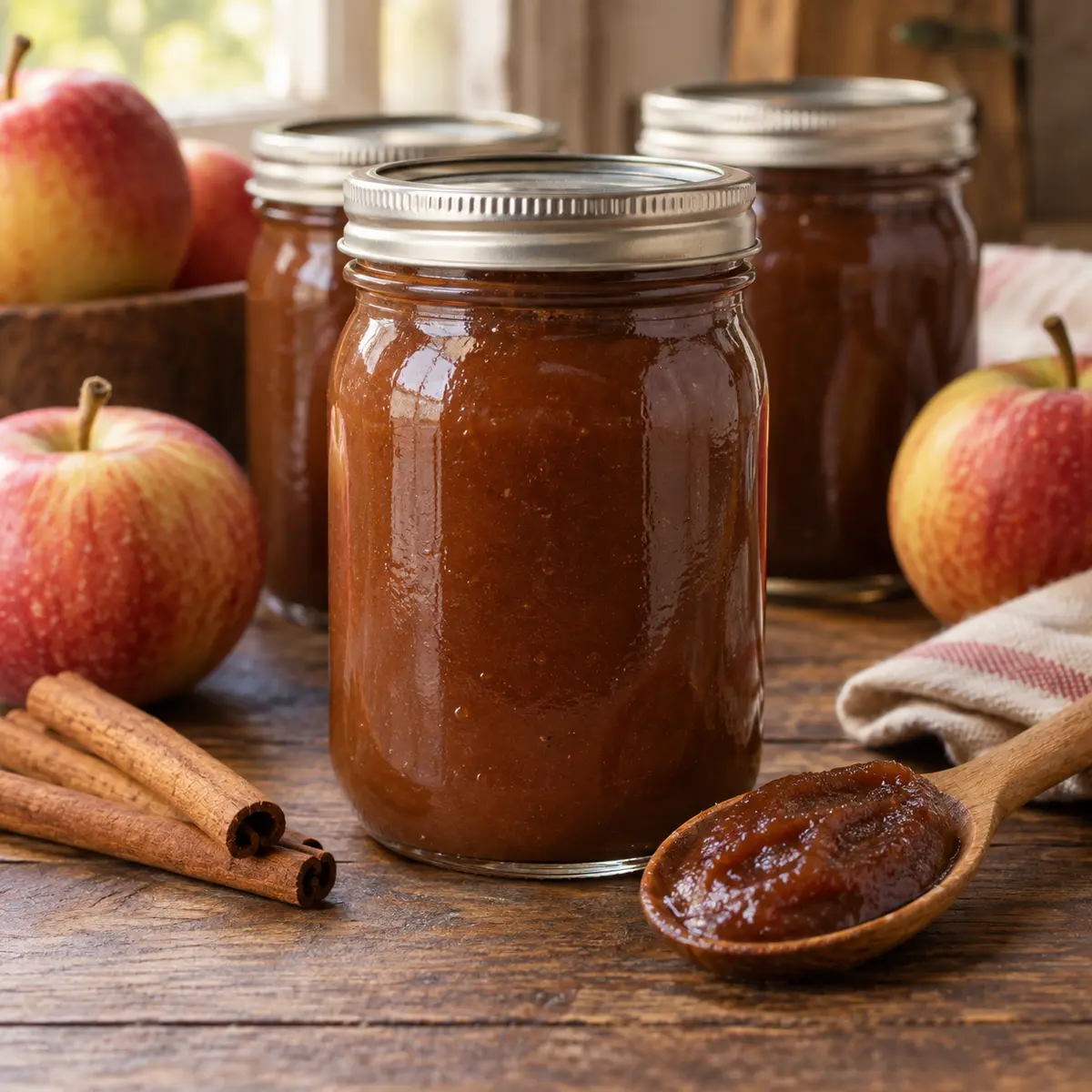
This traditional spiced apple butter comes from a tested recipe by the National Center for Home Food Preservation, based on USDA guidance. Apples are slowly cooked with cider and vinegar, sieved smooth, then cooked down with sugars, cinnamon, and cloves until thick and spreadable. The finished butter is packed hot into jars and preserved by boiling-water
Before you begin
- Method
- Boiling-water
canning - Pack
- Hot pack
- Jar size
- Half-pints or pints
- Headspace
- 1/4 inch
Altitude and processing schedule
5 minutes at 0–1,000 ft; 10 minutes at 1,001–6,000 ft; 15 minutes above 6,000 ft. Pre-sterilize jars for the 5-minute process.
Affiliate disclosure: This recipe may contain affiliate links to equipment. We may earn a commission from qualifying purchases at no additional cost to you.
Apple Butter — NCHFP
Ingredients
- 8 lb apples
- 2 cups apple cider
- 2 cups vinegar 5% acidity
- 2 1/4 cups white sugar
- 2 1/4 cups packed brown sugar
- 2 tbsp ground cinnamon
- 1 tbsp ground cloves
Equipment
- Boiling-water canner
Directions
- Wash, remove stems, quarter and core the apples. Cook slowly with the cider and vinegar until soft.
- Press the cooked fruit through a food mill or sieve. Add both sugars and spices; cook gently, stirring frequently, until thick enough to round up on a spoon.
- Fill hot sterile half-pint or pint jars, leaving 1/4-inch headspace. Remove bubbles, adjust headspace, wipe rims, and apply two-piece lids.
- Process half-pints or pints in a boiling-water canner for 5 minutes at 0–1,000 ft, 10 minutes at 1,001–6,000 ft, or 15 minutes above 6,000 ft.
Recipe Notes
Private Notes
Questions or results?
Discuss this recipe with the canning community. Community comments do not replace the tested source or safety classification shown on this page.
Join the discussion
Please log in or create a free account to discuss this recipe. You will return here afterward.
Tried this recipe?
Share your results how it turned out.Made this? Rate it below and tell us how your batch turned out.
Serving suggestions
Serve after opening or preparation and refrigerate leftovers promptly.
Frequently asked questions
Can I change the process?
No. This is a tested recipe, and its safety depends on the exact ingredient proportions, headspace, jar sizes, and the boiling-water process with its altitude adjustments. Changing ingredients, reducing acidity, or shortening the process can make the food unsafe. Always follow the tested recipe and the processing schedule exactly as written.
What if spoilage is suspected?
Discard the jar’s contents without tasting if you see bulging lids, leaks, spurting liquid, off odors, mold, or any other sign of spoilage. Never taste food to check whether it is safe. When in doubt, throw it out — no home test can confirm that spoiled canned food is safe to eat.
Can I reduce the sugar?
No. Sugar is part of this tested formulation, and reducing it changes the recipe that was validated for safety. The page notes that the reduced-sugar version is a separate tested formulation. If you want less sugar, use that separately tested recipe rather than altering this one.
Do jars need presterilizing?
This recipe’s processing schedule includes a short 5-minute process at the lowest altitudes, and the page states that jars must be pre-sterilized for that 5-minute process. For longer processes, clean jars are sufficient because the processing itself sterilizes them. Always start with clean, undamaged jars and inspect them before filling.
How long do sealed jars keep?
Properly sealed jars stored in a cool, dark, dry place keep their best quality for about one year, according to general home-canning guidance. Label each jar with its contents and the date, and use older jars first. If a seal ever fails or you notice signs of spoilage, discard the contents without tasting.
What if a jar doesn’t seal?
Check seals after the jars have cooled completely, usually by pressing the center of each lid. If a lid flexes or a jar did not seal, refrigerate it promptly and use the contents soon, or reprocess the jar with a new lid following the tested process. Never store unsealed jars at room temperature.
How this recipe compares
Traditional apple butter uses both white and brown sugar; the reduced-sugar recipe is a separate tested formulation.
Troubleshooting
Stir frequently during reduction to prevent scorching and test the documented endpoint before filling.
Never taste food to determine safety.

Garden planning for this recipe
Plant, space, variety, zone, and timing estimates live on dedicated ingredient pages:
Typical canning season
Season: Fall
Months: September, October, November
How much of the main ingredient should I grow?
35–70 lb of Apples per person per year
This is an annual planning range that includes preserving and typical fresh use. Plant, row-foot, and square-foot estimates are shown only when compatible cited yield or spacing data is available.
Garden yields vary by cultivar, climate, soil, pests, and care. Always measure the exact prepared ingredient amount required by the tested canning recipe.