Safety classification
Tested
Testing authority: National Center for Home Food Preservation (University of Georgia / USDA-derived guidance)
Safety reviewed: 09/13/2026
Processing details
Source & provenance
Safety classification: Tested recipe from NCHFP.
Safety summary
Do not use bananas, dates, figs, Asian pears, tomatoes, cantaloupe or other melons, papaya, persimmons, ripe mango, or coconut. Do not raw pack.
Processing details
- Method
- Boiling Water
- Pack style
- Hot
- Jar sizes
- Pint or Quart Jars
- Headspace
- 1/4 inch
- Processing time
- 15 minutes at 0–1,000 ft; 20 minutes at 1,001–6,000 ft; 25 minutes above 6,000 ft.
Tested source
Safety status: Tested authoritative recipe. Follow the National Center for Home Food Preservation source exactly.
Canning timeline
- Prepare the canner, jars, and ingredients.
- Use a fruit approved by the source, prepare it with 1 cup water per quart of fruit, press or sieve, reheat the purée to boiling, and fill hot.
- Fill pints or quarts, leaving 1/4 inch headspace.
- 15 minutes at 0–1,000 ft; 20 minutes at 1,001–6,000 ft; 25 minutes above 6,000 ft.
- Cool undisturbed for 12 to 24 hours and check seals.
Equipment
Boiling-water canner, saucepan, food mill or sieve, jar lifter, and pint or quart jars.
Visual method guide
- Prepare: Select sound fruit or vegetables and measure exactly.
- Pack: Hot pack; remove air bubbles and maintain 1/4 inch headspace.
- Process: Boiling-water canning; use the schedule for your altitude.
- Cool: Keep jars upright and undisturbed before testing seals.
Safety essentials
Do not use bananas, dates, figs, Asian pears, tomatoes, cantaloupe or other melons, papaya, persimmons, ripe mango, or coconut. Do not raw pack.
About this recipe
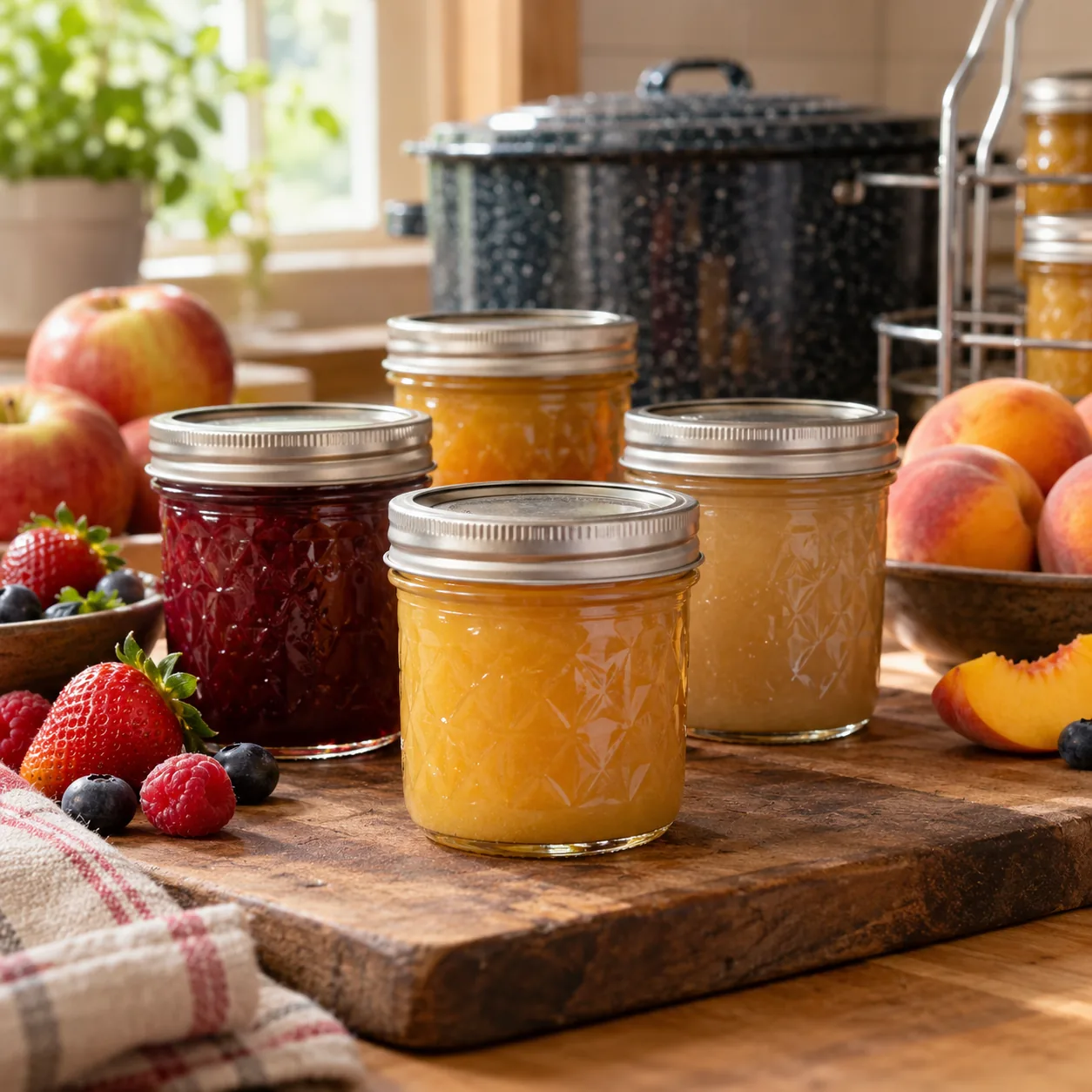
Fruit Purées is a tested NCHFP home-canning recipe using hot pack and boiling-water canning.
Before you begin
- Method
- Boiling-water canning
- Pack
- Hot pack
- Jar size
- Pints or quarts
- Headspace
- 1/4 inch
Read the authoritative source completely before processing.
Altitude and processing schedule
15 minutes at 0–1,000 ft; 20 minutes at 1,001–6,000 ft; 25 minutes above 6,000 ft.
Affiliate disclosure: This recipe may contain affiliate links to canning equipment. We may earn a commission from qualifying purchases at no additional cost to you.
Fruit Purées — NCHFP
Ingredients
- suitable fruit do not use bananas, dates, figs, Asian pears, tomatoes, cantaloupe or other melons, papaya, persimmons, ripe mango, or coconut
- 1 cup hot water per quart of prepared fruit
- sugar optional, to taste
Equipment
- Boiling-water canner
Directions
- Stem, wash, drain, peel, and remove pits from suitable fruit as needed. Do not use this procedure for the excluded fruits listed in the safety note.
- Measure fruit into a large saucepan, crushing slightly if desired. Add 1 cup hot water for each quart of fruit. Cook slowly until soft, stirring frequently.
- Press fruit through a sieve or food mill. Add sugar to taste if desired. Reheat the purée to boiling, or until added sugar dissolves.
- Fill hot jars with hot purée, leaving 1/4-inch headspace.
- Process pints or quarts in a boiling-water canner for 15 minutes at 0–1,000 ft, 20 minutes at 1,001–6,000 ft, or 25 minutes above 6,000 ft.
Recipe Notes
Private Notes
Questions or results?
Discuss this recipe with the canning community. Community comments do not replace the tested source or safety classification shown on this page.
Join the discussion
Please log in or create a free account to discuss this recipe. You will return here afterward.
Tried this recipe?
Share your results how it turned out.Serving suggestions
Use as a dessert sauce, breakfast topping, baking ingredient, or base for smoothies after opening.
Frequently asked questions
Can I change the ingredients or process?
Only make changes expressly permitted by the authoritative source. Do not use bananas, dates, figs, Asian pears, tomatoes, cantaloupe or other melons, papaya, persimmons, ripe mango, or coconut. Do not raw pack.
What if a jar does not seal?
Refrigerate promptly, or reprocess within 24 hours using a new lid and the complete tested process if current food-safety guidance permits.
How this recipe compares
This general purée method excludes several fruits; excluded fruits require a separately tested recipe or another preservation method.
Troubleshooting
Maintain a fluid purée and bring it back to boiling before filling; never use an excluded fruit.
Discard any jar that leaks, bulges, spurts, is moldy, or otherwise shows spoilage. Never taste food to determine safety.
Source & provenance
National Center for Home Food Preservation: Fruit Purées. National Center for Home Food Preservation tested fruit-canning guidance.
Typical canning season
Season: All Year
Months: January, February, March, April, May, June, July, August, September, October, November, December
How much of the main ingredient should I grow?
12–25 lb of Mixed produce per person per year
This is an annual planning range that includes preserving and typical fresh use. Plant, row-foot, and square-foot estimates are shown only when compatible cited yield or spacing data is available.
Garden yields vary by cultivar, climate, soil, pests, and care. Always measure the exact prepared ingredient amount required by the tested canning recipe.