Safety classification
Tested
Testing authority: National Center for Home Food Preservation (University of Georgia / USDA-derived guidance)
Safety reviewed: 09/09/2026
Processing details
Altitude adjustment: Dial gauge: 11 psi at 0–2,000 ft; 12 psi at 2,001–4,000 ft; 13 psi at 4,001–6,000 ft; 14 psi at 6,001–8,000 ft. Weighted gauge: 10 psi at 0–1,000 ft; 15 psi above 1,000 ft.
Source & provenance
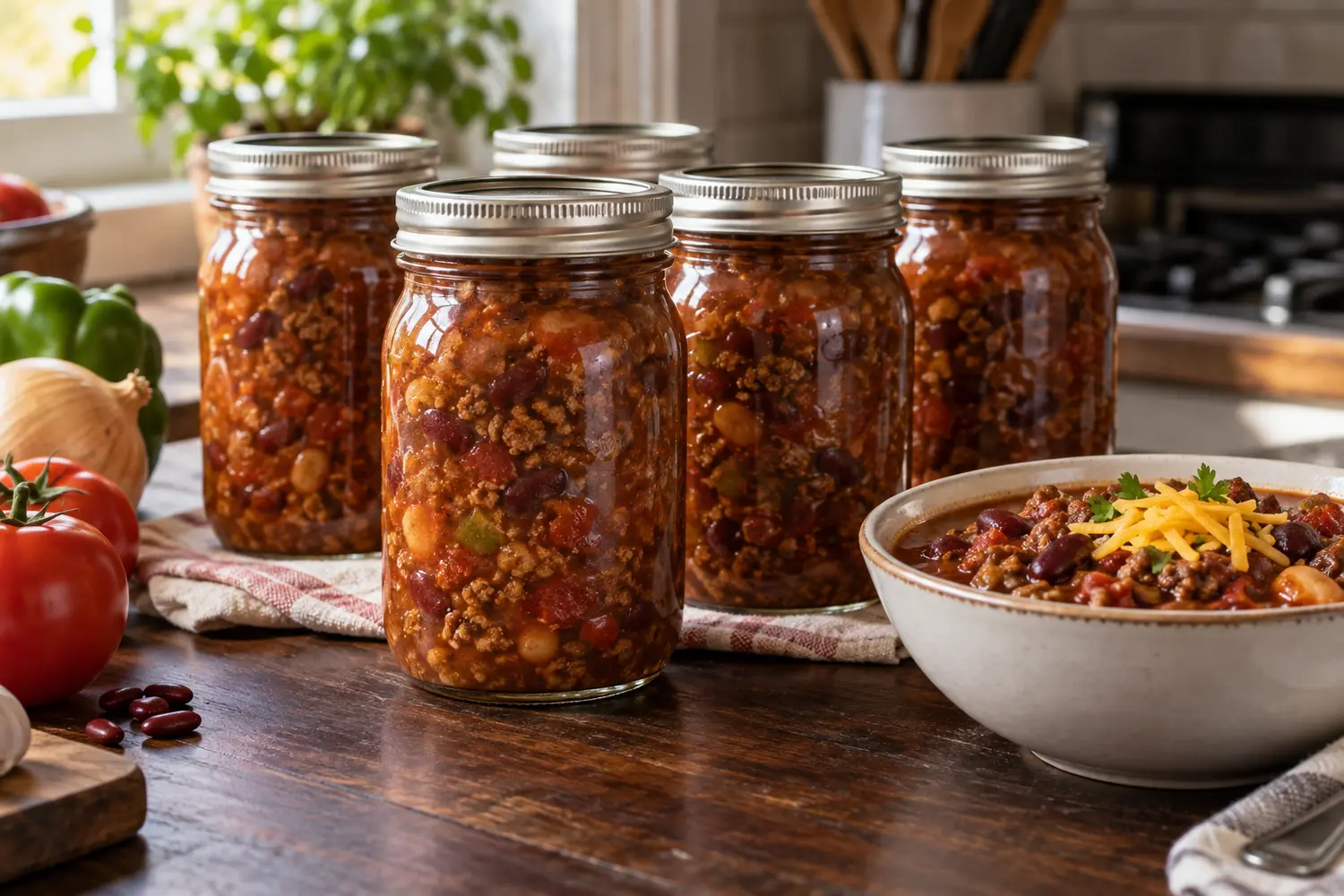
Chili con carne canning safety
| Method | Pressure |
|---|---|
| Pack | Hot pack |
| Jar sizes | Pints only |
| Headspace | 1 inch |
| Yield/limit | About 9 pints |
Safety boundary: Keep the tested bean, meat, tomato, onion, pepper, and seasoning proportions; use pints only and do not thicken.
Processing details
- Method
- Pressure
- Pack style
- Hot
- Jar sizes
- Pint Jars
- Headspace
- 1 inch
- Processing time
- Pints: 75 min
Tested recipe source: National Center for Home Food Preservation (NCHFP)
Chili con carne timeline
- Prepare: Hydrate and simmer the beans; brown ground beef with onion and optional peppers and drain.
- Pack: Combine with the tested tomatoes and seasonings, simmer 5 minutes, and fill hot without thickening.
- Process: Pressure-can pints for 75 minutes.
Equipment for chili con carne
Affiliate disclosure: Equipment links may earn a commission at no added cost; safety guidance is independent.
- Pressure canner with rack and tested dial or weighted gauge
- Pints only Mason jars with two-piece lids
- Large pot,
canning funnel, jar lifter, headspace tool, and bubble remover
Visual method guide
- Hydrate beans exactly as directed.
- Brown meat, onion, and optional peppers; drain fat.
- Combine with tomatoes and seasonings and simmer 5 minutes.
- Fill pints with 1-inch headspace; do not thicken.
The official source and WPRM recipe card remain authoritative.
Safety essentials
Tested NCHFP pressure-canning recipe. Use pint jars, do not thicken, and do not alter the tested proportions.
What is chili con carne?
This tested nine-pint formula combines hydrated beans, ground beef, onion, optional peppers, seasonings, and tomatoes.
Before you begin
- Use dried pinto or red kidney beans prepared as directed.
- Optional peppers may be omitted, not increased.
- Do not add flour, starch, masa, or other thickener.
Altitude-adjusted pressure schedule
| Jar/product | Time | 0–2,000 ft | 2,001–4,000 ft | 4,001–6,000 ft | 6,001–8,000 ft |
|---|---|---|---|---|---|
| Pints | 75 min | 11 psi | 12 psi | 13 psi | 14 psi |
| Jar/product | Time | 0–1,000 ft | Above 1,000 ft |
|---|---|---|---|
| Pints | 75 min | 10 psi | 15 psi |
Chili Con Carne — NCHFP
Ingredients
- 3 cups dried pinto or red kidney beans
- 5 1/2 cups water
- 5 tsp salt divided
- 3 lb ground beef
- 1 1/2 cups chopped onion
- 1 cup chopped peppers optional
- 1 tsp black pepper
- 3–6 tbsp chili powder
- 2 qt crushed or whole tomatoes
Equipment
- 1 Pressure canner Dial- or weighted-gauge pressure canner appropriate for altitude.
- 9 Canning jars Pints only.
- 9 Two-piece canning lids Use new flat lids and prepare according to manufacturer directions.
Directions
- Soak beans 12–18 hours and drain. Add 5 1/2 cups fresh water and 2 tsp salt; boil, then simmer 30 minutes and drain.
- Brown beef, onion, and optional peppers; drain excess fat.
- Add remaining salt, black pepper, chili powder, tomatoes, and cooked beans. Simmer 5 minutes. Do not thicken.
- Fill pint jars leaving 1-inch headspace.
- Pressure process pints 75 minutes; dial 11/12/13/14 psi by altitude, weighted 10 psi through 1,000 ft and 15 psi above.
Recipe Notes
Private Notes
Questions or results?
Discuss this recipe with the canning community. Community comments do not replace the tested source or safety classification shown on this page.
Join the discussion
Please log in or create a free account to discuss this recipe. You will return here afterward.
Tried this recipe?
Share your results how it turned out.How to serve chili con carne
Heat thoroughly and serve alone or with rice, cornbread, baked potatoes, or toppings added after opening.
Chili con carne questions
Can I use quart jars?
No. The tested schedule is for pints only.
Can I use a boiling-water canner?
No. This low-acid food requires pressure
What if pressure drops?
Restore the required pressure and restart the full processing time.
Canned chili versus serving-day chili
The canned formula must remain thin and fixed. Cheese, extra peppers, pasta, or thickeners may be added after opening.
Chili con carne troubleshooting
Why is the chili too thick before filling?
Do not add thickeners; drain beans and browned meat as directed and keep the tested tomato proportion.
What if a jar does not seal?
Refrigerate promptly or follow authoritative reprocessing guidance within the permitted time.
Source & provenance
NCHFP, “Chili Con Carne”. Official USDA/NCHFP tested recipe.
Editorial review: Supporting blocks checked against the official source on September 20, 2026. The WPRM recipe card was preserved.
Garden planning for this recipe
Plant, space, variety, zone, and timing estimates live on dedicated ingredient pages:
Typical canning season
Season: All Year
Months: January, February, March, April, May, June, July, August, September, October, November, December
How much of the main ingredient should I grow?
12–25 lb of Mixed produce per person per year
This is an annual planning range that includes preserving and typical fresh use. Plant, row-foot, and square-foot estimates are shown only when compatible cited yield or spacing data is available.
Garden yields vary by cultivar, climate, soil, pests, and care. Always measure the exact prepared ingredient amount required by the tested canning recipe.