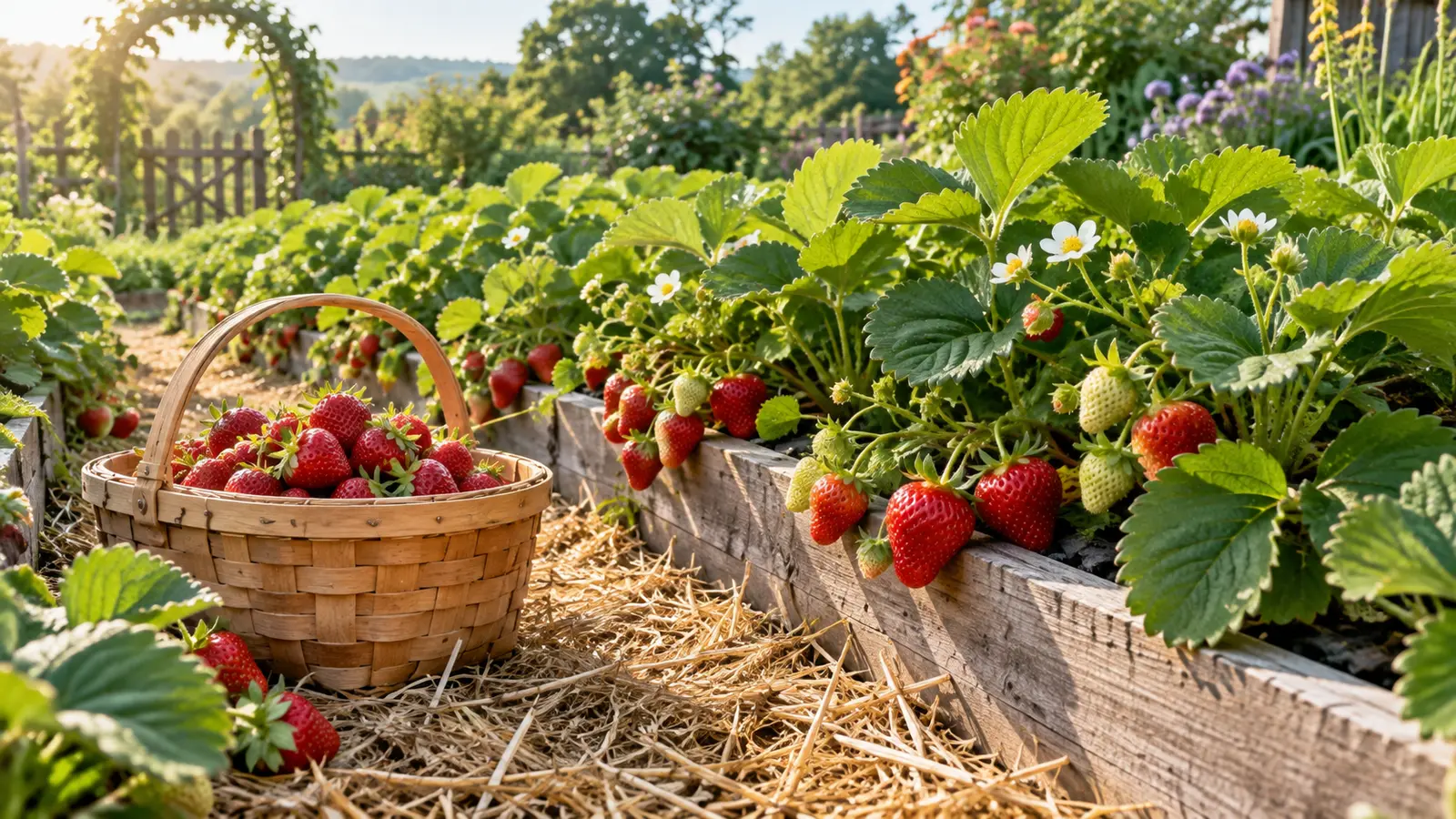
Plan strawberries for jam, preserves, and tested fruit recipes using planting-system, cultivar, renovation, and harvest-loss assumptions.
Your growing location
Hardiness zone describes winter minimum temperature. It does not replace frost dates, day length, soil temperature, or current weather.
Nothing is shared until you choose a lookup button. ZIP lookup uses PHZMAPI. “Use my location” sends coordinates to BigDataCloud only to obtain a ZIP, then sends that ZIP to PHZMAPI; coordinates are not stored by this site.
Verify the result on the official USDA 2023 map; manual override always remains available.
Plants and space calculator
Space by planting style
Preservation-suitable variety direction
Zone is only one factor. Day length, disease pressure, storage quality, maturity, and use may be more important.
June-bearing cultivars
Concentrated harvests can suit batch preserving; choose locally adapted disease-resistant cultivars.
Day-neutral cultivars
Spread harvest over a longer period and may require freezing fruit before a full canning batch.
Planting and indoor-start timing
Plant according to local spring soil conditions and cultivar system. Follow regional guidance for flower removal, runner training, and renovation.
Current weather is not loaded automatically; check the local forecast and soil before planting.
Canning recipes using strawberries
- Rhubarb Berry Conserve — UAF Extension
- Rhubarb-Strawberry Jam — Mrs. Wages
- Mrs. Wages® State Fair Strawberry Rhubarb Jam Recipe — Mrs. Wages
- Food in Jars’ Strawberry Vanilla Jam — Mrs. Wages
- Blue Ribbon Strawberry Orange Jam — Mrs. Wages
- Strawberry Lemonade Concentrate — Bernardin
- Classic Strawberry Jam — Ball
- Strawberry Jam with Powdered Pectin — NCHFP
Sources, formulas, and limits
Plants = household annual target ÷ selected yield per plant, rounded up. Area or row units = target ÷ compatible cited yield, rounded up. “Typical” uses the cited midpoint.